
⚠️ Fruit Allergy & Interaction Checker
Check potential fruit-medication interactions and Oral Allergy Syndrome (OAS) cross-reactivity!
1. Select Fruit:
2. Select Medication or Known Allergy:
👈 Select a fruit along with your medication or allergy type, then click Check Safety & Interactions!
Fruit Allergy & Drug Interaction Checker – Is It Safe?
While fruits are a essential part of a healthy diet, certain fruits can interact dangerously with prescription medications or trigger allergic reactions in sensitive individuals. Understanding these hidden interactions is vital for your health and safety.
Use our Fruit Allergy & Interaction Checker tool above to instantly analyze potential drug-fruit conflicts and cross-reactivity risks based on your medications or environmental allergies.
Why Check for Fruit and Medication Interactions?
Many people assume that because fruits are natural, they are always safe to eat alongside any medication. However, natural compounds in fruits can dramatically alter how your body processes prescription drugs:
- Enzyme Blockers: Fruits like grapefruit contain compounds (furanocoumarins) that block enzymes like CYP3A4, causing higher levels of medication to enter your bloodstream and increasing the risk of severe side effects.
- Nutrient Spikes: Potassium-rich fruits like bananas or avocados, when combined with specific blood pressure medications, can lead to dangerous levels of potassium in the body (hyperkalemia).
- Absorption Inhibitors: Juices from apples, oranges, or grapefruits can interfere with transporters in the gut, reducing how much of an allergy medication or antibiotic your body absorbs.
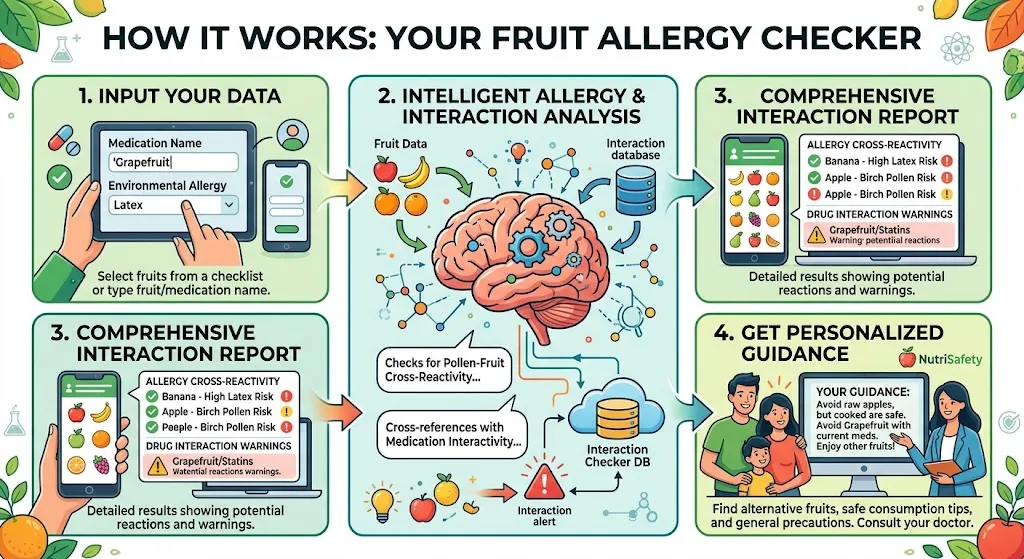
Fruit Allergy & Drug Interaction Checker – Is It Safe?
While fruits are a essential part of a healthy diet, certain fruits can interact dangerously with prescription medications or trigger allergic reactions in sensitive individuals. Understanding these hidden interactions is vital for your health and safety.
Use our Fruit Allergy & Interaction Checker tool above to instantly analyze potential drug-fruit conflicts and cross-reactivity risks based on your medications or environmental allergies.
Why Check for Fruit and Medication Interactions?
Many people assume that because fruits are natural, they are always safe to eat alongside any medication. However, natural compounds in fruits can dramatically alter how your body processes prescription drugs:
- Enzyme Blockers: Fruits like grapefruit contain compounds (furanocoumarins) that block enzymes like CYP3A4, causing higher levels of medication to enter your bloodstream and increasing the risk of severe side effects.
- Nutrient Spikes: Potassium-rich fruits like bananas or avocados, when combined with specific blood pressure medications, can lead to dangerous levels of potassium in the body (hyperkalemia).
- Absorption Inhibitors: Juices from apples, oranges, or grapefruits can interfere with transporters in the gut, reducing how much of an allergy medication or antibiotic your body absorbs.

What is Oral Allergy Syndrome (OAS) & Cross-Reactivity?
If your mouth or throat hitches or tingles after eating raw fruits like apples, kiwi, or bananas, you might be experiencing Oral Allergy Syndrome (OAS), also known as Pollen Food Allergy Syndrome.
This happens because the proteins found in certain fruits closely resemble the allergic proteins found in environmental pollens or latex:
- Birch Pollen Allergy: Frequently cross-reacts with apples, pears, cherries, and peaches.
- Latex Allergy: Highly cross-reactive with bananas, kiwis, avocados, and chestnuts.
- Ragweed Pollen Allergy: Can cause reactions with bananas, melons, and cucumbers.
Common Fruit & Drug Interactions to Watch For
| Fruit | Drug Category | Potential Risk Level | Effect |
| Grapefruit | Statins (Cholesterol) | ⚠️ High Risk | Increases drug absorption, risking toxicity and muscle damage. |
| Grapefruit | Blood Pressure (CCBs) | ⚠️ High Risk | Causes sudden drops in blood pressure and rapid heart rate. |
| Banana / Avocado | ACE Inhibitors (BP) | 🟡 Moderate | Raises potassium levels, which can lead to heart palpitations. |
| Apple / Orange Juice | Antihistamines (Allegra) | 🟡 Moderate | Blocks drug absorption, making the allergy medication ineffective. |
| Pineapple / Avocado | Blood Thinners (Warfarin) | 🟡 Moderate | High Vitamin K or enzymes can interfere with blood clotting time. |
Frequently Asked Questions (FAQs)
Does cooking fruit prevent Oral Allergy Syndrome (OAS) reactions?
Yes! In most cases, heating or cooking raw fruits breaks down (denatures) the heat-sensitive proteins that trigger pollen cross-reactivity. For example, a person with a birch pollen allergy may react to a raw apple but safely eat cooked apple pie.
How long after taking medication should I wait to eat grapefruit?
Even if you space out your medication and grapefruit consumption by several hours, the enzyme-blocking effect of grapefruit can last for up to 24–72 hours. If your drug interacts with grapefruit, it is best to avoid it completely while on that medication.
Is this interaction checker a substitute for medical advice?
No. This tool provides general educational information based on clinical nutrition data. Always consult your doctor or a pharmacist before changing your diet or stopping any prescribed medication.
Stay Safe and Informed!
Managing your diet while taking medications doesn’t have to be confusing. Use our checker whenever you try new fruits or start a new prescription to ensure your meals remain both nutritious and safe!