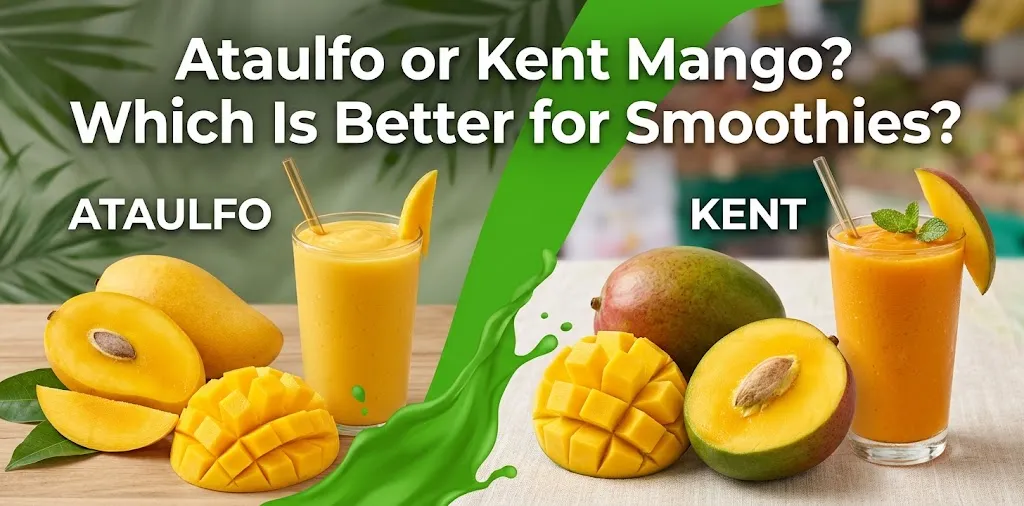
Ataulfo or Kent Mango? Which Is Better for Smoothies?

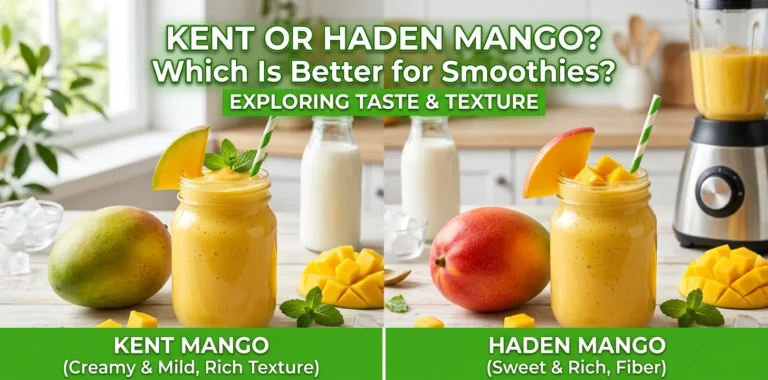
For most smoothies, Ataulfo mango is the better choice because its ripe flesh is creamy, smooth, sweet, and naturally low in fiber. Kent mango is also an excellent option, especially when you want a larger amount of juicy mango with a slightly brighter, more tropical flavor. The best pick depends on whether you value creamy texture or volume and juiciness.
Ataulfo vs. Kent Mango for Smoothies
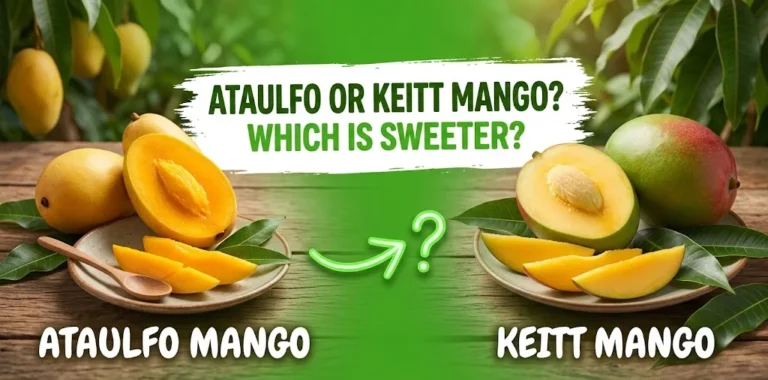
Both varieties work well in a blender, but they create a different smoothie experience. Ataulfo, also called Honey mango, has smooth, fiber-free flesh and a sweet, creamy flavor. Kent has juicy, tender flesh with limited fiber and a sweet flavor with mild sour notes.
| Feature | Ataulfo Mango | Kent Mango |
|---|---|---|
| Texture | Creamy and smooth | Juicy and tender |
| Fiber | Very low | Limited |
| Flavor | Sweet, creamy, peachy/tropical | Sweet, rich, tropical with slight sour notes |
| Flesh color | Deep golden yellow | Bright yellow |
| Size | Smaller | Larger |
| Smoothie texture | Thick and silky | Juicy and smooth |
| Best strength | Creaminess and flavor | Volume and juiciness |
| Overall smoothie pick | Best for most smoothies | Great alternative |
The difference becomes especially noticeable when the mango is fully ripe. Ripening increases sugars and softens the fruit, which makes ripe mango much better for blending.
Why Ataulfo Mango Is Better for Creamy Smoothies
Ataulfo is a strong choice when your main goal is a thick, smooth smoothie.
The National Mango Board describes Honey, or Ataulfo, mangoes as creamy with no fibers throughout the flesh. They also have a sweet flavor and vibrant yellow color.
That texture matters in a smoothie. A low-fiber mango blends easily with ingredients such as:
- Greek yogurt
- Milk
- Oat milk
- Coconut milk
- Bananas
- Frozen berries
- Chia seeds
- Oats
Ataulfo also has a smaller seed and a relatively high usable flesh yield for its size. In a National Mango Board yield study, Honey (Ataulfo) had a usable yield of about 71%, similar to Kent at about 71%.
If you want a smoothie that feels almost dessert-like without adding much extra sweetener, a ripe Ataulfo is often the easier choice.
Why Kent Mango Can Be Better for Juicy Smoothies
Kent mango is worth choosing when you want a juicy, refreshing smoothie rather than an especially thick one.
Kent has a large oval shape, juicy tender flesh, limited fiber, and a sweet flavor with hints of sourness. The variety is also specifically described by the National Mango Board as suitable for juicing.
That makes Kent useful for smoothies containing other thick ingredients.
For example, if you blend Kent with Greek yogurt and frozen banana, its juicy texture can help keep the mixture from becoming overly dense.
Kent also gives you more fruit to work with because the mango itself is generally larger. So if you’re making several smoothies for a family, a few large Kent mangoes can be convenient.
Which Mango Has Better Flavor in a Smoothie?
This comes down to personal taste, but Ataulfo usually has the advantage if you want a rich, sweet mango flavor.
Ataulfo has a tropical, peachy aroma and a sweet-and-sour flavor profile. Kent has a sweet, rich flavor with tropical and mild sour notes.
Think of the difference this way:
- Ataulfo: creamy, sweet, rich, honey-like
- Kent: juicy, sweet, tropical, slightly tangy
If your smoothie contains mild ingredients such as milk or yogurt, Ataulfo’s stronger creamy character can make the mango stand out.
If you’re adding lime, pineapple, orange, or other bright fruits, Kent’s juicy and slightly tangy character can fit nicely into the mix.
Which Mango Makes a Thicker Smoothie?
Ataulfo is usually the better choice for a thick smoothie.
Its creamy flesh and very low-fiber texture make it particularly suitable when you want a smooth, rich consistency. Kent is also relatively low in fiber, but its juicy texture tends to give the drink a lighter feel.
For an extra-thick smoothie, use frozen mango instead of relying only on fresh fruit.
A simple combination is:
- Frozen Ataulfo mango
- Plain Greek yogurt
- Banana
- A small amount of milk
Blend until smooth and add more liquid only if needed.
Which Mango Is Better When You Need More Fruit?
Kent has an advantage if you’re buying mango specifically for larger smoothie batches.
Kent mangoes are large, while Ataulfo mangoes are generally smaller. The National Mango Board’s yield information also shows that both varieties can provide a good percentage of usable fruit when properly cut.
This matters when you’re making smoothies for several people.
For example, if you’re preparing four smoothies at once, larger Kent mangoes may make portioning easier. You can cut the usable flesh, freeze it, and keep portions ready for future drinks.
How to Tell When Ataulfo and Kent Mangoes Are Ripe
Choosing a ripe mango can matter more than choosing between two good varieties.
For Ataulfo, look for fruit that has turned a deeper golden yellow and may develop small wrinkles as it becomes fully ripe. Gentle pressure should also reveal some softness.
For Kent, the skin can remain mostly green even when the fruit is ripe. Instead of relying on red or green skin color, gently squeeze the mango. Ripe Kent mangoes should give slightly, and yellow undertones or dots become more noticeable as they ripen.
Don’t judge either variety only by its outside color. Ripeness is better assessed using several signs, including firmness and internal fruit development.
Fresh or Frozen Mango for Smoothies?
Both work, but frozen mango is usually more convenient when you want a cold, thick smoothie.
Fresh mango gives you a softer, juicier result and works well when you’re already using frozen ingredients such as banana or berries.
Frozen mango has two practical advantages: it chills the drink without needing as much ice, and it can help create a thicker texture.
If you have ripe Ataulfo or Kent mangoes that you won’t eat soon, cutting the flesh into pieces and freezing it can make future smoothies easier to prepare.
Which One Should You Choose?
The best choice depends on the smoothie you’re making.
Choose Ataulfo if you want:
- A creamy texture
- Strong mango flavor
- Very low-fiber flesh
- A thick smoothie
- A naturally sweet taste
- A mango that works well with yogurt or banana
Choose Kent if you want:
- A juicy smoothie
- A large amount of mango
- Sweet tropical flavor with some tang
- A mango that works well for juicing
- A good alternative when Ataulfo isn’t available
Two practical examples
If you’re making a mango-yogurt breakfast smoothie, Ataulfo is the better pick. Its creamy texture pairs naturally with Greek yogurt and banana.
If you’re making a mango-pineapple refresher, Kent may be the better choice. Its juicy texture and mild sour notes can complement pineapple and citrus.
Are Ataulfo and Kent Good for Green Smoothies?
Yes. Either variety can work in a green smoothie.
Ataulfo is especially useful when you want mango to soften the flavor of ingredients such as spinach or kale. Its creamy texture can also make a green smoothie feel smoother.
Kent works well when the recipe contains plenty of liquid or other juicy fruit.
For either variety, ripe mango is preferable because ripening increases fruit sugars while reducing firmness and acidity.
What About Nutrition?
Both are mango varieties, so the basic nutritional value comes from mango itself rather than the smoothie label you give it.
Mango provides nutrients including vitamin C, vitamin A, folate, vitamin B6, and fiber. The National Mango Board reports that a 3/4-cup serving provides about 50% of the Daily Value for vitamin C.
For a balanced smoothie, the mango can be paired with a source of protein or fat, such as Greek yogurt, milk, or a suitable nut or seed butter.
The important point is not to assume that adding mango automatically makes every smoothie nutritionally balanced. The other ingredients still matter.
How Much Mango Should You Use?
For one smoothie, about 1 cup of mango chunks is a practical starting point.
You can adjust the amount depending on the other ingredients. If you’re using banana, pineapple, yogurt, or other sweet fruit, you may need less mango.
If you’re using spinach or another ingredient with a stronger flavor, a little more mango can help balance the taste.
For a thicker smoothie, use frozen mango and start with less liquid. Add liquid gradually until the blender reaches the texture you want.
Frequently Asked Questions
Is Ataulfo mango sweeter than Kent mango?
Ataulfo has a rich, sweet flavor with a creamy character, while Kent is also sweet but tends to have a juicier texture and mild sour notes. The exact taste depends on ripeness and the individual fruit.
Which mango is less fibrous for smoothies?
Ataulfo is the better choice if minimizing fiber strands is your priority. Its flesh is described as smooth and fiber-free, while Kent has tender flesh with limited fibers.
Can you use Kent mango instead of Ataulfo in a smoothie?
Yes. Kent is an excellent substitute for Ataulfo in smoothies, especially when you want a juicy, sweet mango flavor. You may simply get a slightly different texture and flavor profile.
The Bottom Line
Ataulfo is the better overall mango for smoothies if your priority is creamy texture, strong sweetness, and minimal fiber. Kent is the better alternative when you want juicy flesh, larger fruit, and a slightly tangier tropical flavor.
For the smoothest result, choose a fully ripe mango and use frozen chunks when you want a cold, thick drink. A ripe Ataulfo is the first variety I’d reach for when making a simple mango smoothie.