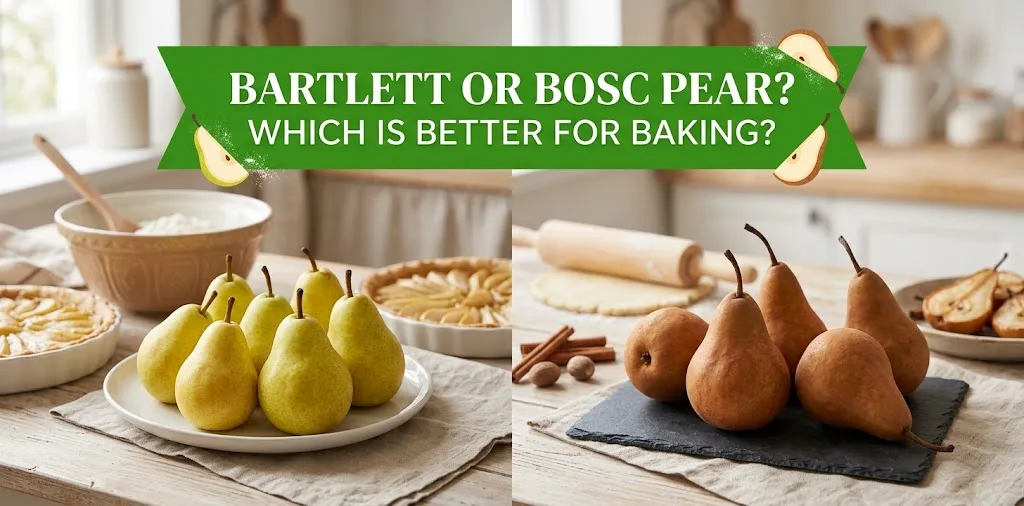
Bartlett or Bosc Pear? Which Is Better for Baking?

If you’re choosing between Bartlett and Bosc pears for baking, Bosc is usually the better choice. Its firm, dense flesh holds its shape well in pies, tarts, crisps, and other baked desserts. Bartlett pears are sweeter and juicier but soften more quickly when heated, so they work better when you want a softer, more jammy texture.
Bartlett vs. Bosc Pears for Baking
The biggest difference is what happens to the pear during baking. Bosc pears stay firm and keep their shape, while ripe Bartlett pears become much softer and can break down during cooking.
| Feature | Bartlett | Bosc |
|---|---|---|
| Texture | Soft and juicy when ripe | Firm and dense |
| Flavor | Sweet, classic pear flavor | Honey-sweet with woodsy notes |
| Holds shape when baked | Fair to poor when fully ripe | Excellent |
| Best for pies and tarts | Use with care | Excellent |
| Best for crisps and crumbles | Good when underripe | Excellent |
| Best for sauces and pear butter | Excellent | Good |
| Best for fresh eating | Excellent | Very good |
| Overall for baking | Good with the right recipe | Better choice |
USA Pears specifically recommends firmer varieties such as Bosc for heated applications because their denser flesh holds its shape better. Bartlett is better known for fresh eating, canning, and its juicy texture.
Why Bosc Works So Well in the Oven
Bosc pears have a naturally firm, crisp texture. That matters when a recipe calls for pear slices that should still look like slices after baking.
They are especially useful for:
- Pear pies
- Pear tarts
- Galettes
- Crisps
- Crumbles
- Roasted pears
- Baked pear desserts
Bosc also has a honey-like flavor with subtle woodsy notes, which works nicely with cinnamon, nutmeg, ginger, and other warm baking spices.
Another advantage is appearance. The elongated shape makes Bosc easy to slice into attractive pieces for a tart or galette.
When Bartlett Pears Are Better for Baking
Bartlett isn’t a bad baking pear. It simply behaves differently.
A ripe Bartlett has a soft, juicy interior and strong classic pear flavor. When heated, it can become very soft. That makes it useful for recipes where you want the fruit to break down rather than stay in neat pieces.
Bartlett can work well in:
- Pear sauce
- Pear butter
- Jam
- Soft crumbles
- Muffins
- Quick breads
- Desserts where a tender, cooked pear texture is desirable
Bake From Scratch notes that Bartletts can be used for baking when they are not quite ripe, while very ripe Bartletts can become mushy.
So the issue isn’t simply “Bartlett cannot be baked.” The better rule is: Bosc is more forgiving when you need structure, while Bartlett is useful when softness is acceptable.
Which Pear Is Better for Pear Pie?
Bosc is the safer pick for pear pie.
A good pie needs pear pieces that remain recognizable after spending time in a hot oven. Bosc’s firm flesh gives you a better chance of getting tender slices without turning the filling into pear sauce.
Bartlett can still be used, especially if you prefer a softer filling. If you choose Bartlett, avoid fruit that is already very soft and ripe.
For a pie with distinct pear slices, Bosc has the advantage.
Which Is Better for Pear Tart or Galette?
Bosc wins again.
Tarts and galettes often display the pear slices on top, so both texture and appearance matter. Bosc slices can hold their shape during baking, making them a strong choice for decorative arrangements.
Bake From Scratch uses Bosc in a pear galette specifically because the pears hold their shape during baking.
Bartlett can work, but very ripe fruit may soften too much and lose the clean appearance you want in an open-faced dessert.
Which Is Better for Pear Crisp or Crumble?
Both can work, but Bosc is better if you want pear pieces that stay intact.
If you like a crisp with soft, almost spoonable fruit underneath the topping, Bartlett can be a good option. Its juicy flesh breaks down more readily as it cooks.
If you prefer noticeable chunks or slices of pear, choose Bosc.
This is one situation where the “better” pear depends on the texture you want.
A Simple Example
Imagine you’re making a pear crumble for a family dinner.
With Bosc, you can expect firmer pear pieces underneath the crumb topping.
With a ripe Bartlett, the filling is more likely to become soft and juicy, blending together more as it cooks.
Neither result is wrong. They simply create different desserts.
How Ripe Should the Pears Be?
Ripeness is especially important when baking with Bartlett pears.
A very ripe Bartlett is soft and juicy, so it has less structural strength during baking. A firmer Bartlett is more suitable when you want the pieces to retain some shape.
Bosc is naturally firmer, but it should still be properly ripened before eating. USA Pears recommends checking ripeness near the neck with gentle pressure.
For Bosc, don’t rely only on skin color. Its brown, russeted skin does not change color in the same way Bartlett’s skin does. California Pears recommends checking the stem end as Bosc ripens.
Can You Substitute Bartlett for Bosc?
Yes, but expect a texture change.
If a recipe calls for Bosc and you only have Bartlett, use Bartlett that is still relatively firm rather than very soft. Keep in mind that the finished dessert may have a softer, juicier filling.
The reverse substitution is usually easier when the recipe can handle firmer fruit. Bosc will generally maintain more structure than a ripe Bartlett.
If the recipe depends on perfectly shaped pear slices, Bosc is the safer choice.
What About the Pear Skin?
Whether you peel the pears depends on the recipe.
For a smooth filling, pie, or sauce, peeling is usually preferable. For rustic desserts such as some galettes or roasted pear dishes, leaving the skin on can be an option if you like its texture.
Bosc’s naturally russeted skin is edible, but many bakers still peel it when making a smooth dessert filling.
The more important factor is consistency: if you’re arranging pear slices on top of a tart, peeling them can give the finished dessert a cleaner appearance.
Bartlett vs. Bosc: Which Should You Buy?
Use this simple rule:
- For pies: Bosc
- For tarts: Bosc
- For galettes: Bosc
- For crisps: Bosc or firm Bartlett
- For crumbles: Either
- For pear sauce: Bartlett
- For pear butter: Bartlett
- For soft baked desserts: Bartlett
- For recipes where pear slices must hold their shape: Bosc
The main decision comes down to texture. If the recipe needs pears to remain recognizable after baking, reach for Bosc. If you want the pear to soften and blend into the dessert, Bartlett may be the better fit.
Frequently Asked Questions
Are Bosc pears sweeter than Bartlett pears?
Not usually. Bartlett pears are known for their sweet, juicy, classic pear flavor, while Bosc has a honey-like sweetness with a more woodsy flavor.
Can you bake ripe Bartlett pears?
Yes, but very ripe Bartletts can become quite soft when heated. For recipes where you want pear pieces to hold their shape, use a firmer Bartlett or choose Bosc instead.
Do Bosc pears need to be peeled before baking?
Not always. Bosc skin is edible, but peeling is often preferred for smooth fillings and some pies or tarts. For rustic baked desserts, leaving the skin on can be perfectly reasonable if you like the texture.
The Bottom Line
For most baking projects, Bosc is the better pear because its firm, dense flesh holds its shape and texture in the oven. Bartlett is sweeter and juicier, making it a better choice when a softer cooked texture is part of the goal.
A practical tip: choose Bosc for pies, tarts, and decorative baked desserts; choose Bartlett when you’re happy with a softer, more cooked-down pear filling.