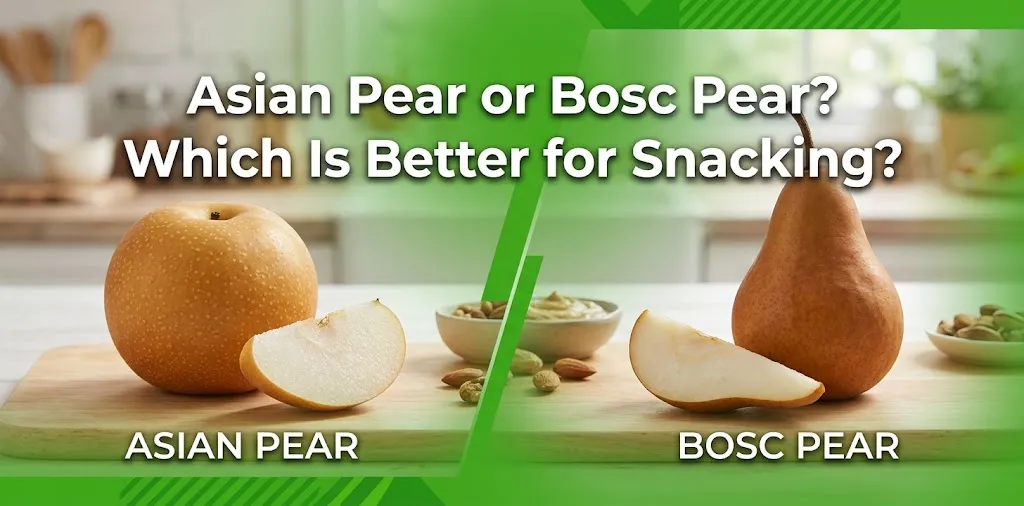
Asian Pear or Bosc Pear? Which Is Better for Snacking?

If you want a crisp, juicy pear that you can eat right away, Asian pear is usually the better choice for snacking. It stays firm and crunchy when ripe and has a sweet, refreshing flavor. Bosc pears are also excellent fresh, but they have a denser, firmer texture and a honey-like, slightly woodsy flavor.
Asian Pear vs. Bosc Pear for Snacking
The biggest difference is texture. Asian pears stay crisp and juicy when ripe, while Bosc pears have a firmer, denser flesh that becomes more tender as they ripen.
| Feature | Asian Pear | Bosc Pear |
|---|---|---|
| Texture | Very crisp and juicy | Firm, crisp, and tender when ripe |
| Flavor | Sweet, fresh, lightly tart | Honey-sweet, woodsy, aromatic |
| Shape | Usually round | Long with a narrow neck |
| Skin | Often green, yellow, or russeted | Cinnamon-brown russeted skin |
| Ripening | Usually ready to eat when harvested | Needs to ripen after harvest |
| Best for | Crisp snacking, salads | Snacking, baking, poaching |
| Best choice for crunch | Asian Pear | Good |
| Best choice for rich pear flavor | Good | Bosc |
Why Asian Pears Are Great for Snacking
Asian pears are often the better pick when you want something with an apple-like crunch. Their flesh stays firm even when the fruit is ripe, and they are naturally juicy and sweet.
They also work well when you want to eat a pear without waiting several days for it to soften. Unlike many European pears, Asian pears ripen on the tree and are generally ready to eat when purchased at the proper maturity.
For a quick snack, try slicing an Asian pear and eating it plain, or pair the slices with cheese, nuts, or yogurt.
Why Bosc Pears Are Great for Snacking
Bosc pears offer a different kind of eating experience. They have firm flesh, a noticeable aroma, and a honey-like sweetness with a slightly woodsy character. USA Pears lists Bosc as suitable for snacking as well as baking, poaching, and broiling.
A ripe Bosc can be crunchy yet tender, so it is not necessarily a soft pear. However, it does not have the same consistently crisp, apple-like texture that makes Asian pears stand out.
Bosc is a good choice if you prefer a more traditional pear shape and a richer, deeper flavor.
Which Pear Is Sweeter?
Both can be sweet, but they have different flavor profiles.
Asian pears are known for strong sweetness, high juiciness, and relatively low acidity. Bosc pears have what USA Pears describes as a honey sweetness with a woodsy flavor.
So the better choice depends on the type of sweetness you enjoy:
- Fresh, juicy sweetness: Asian pear
- Honey-like, richer sweetness: Bosc
- Sweet and crisp: Asian pear
- Sweet with a more aromatic flavor: Bosc
It is difficult to name one as universally sweeter because pear variety, growing conditions, harvest timing, and ripeness can affect flavor.
Which Has the Better Texture for Snacking?
Asian pear wins if texture is your main concern.
Asian pears remain crisp and juicy when ripe. This makes them especially appealing if you like apples and want a similar crunch in a pear.
Bosc pears are also firm, but their texture is denser and more tender as they reach eating ripeness. That firmness is one reason Bosc works so well in cooking, where it can hold its shape.
If You Like Apples
Choose Asian pear. Its crisp flesh and juicy bite are closer to the eating experience many people enjoy from a fresh apple.
If You Like Rich Pear Flavor
Choose Bosc. Its honey sweetness and woodsy character give it a more distinctive flavor.
Which Is Easier to Eat Right Away?
Asian pear generally has the advantage.
Asian pears are harvested when mature and can be ready to eat without the same post-harvest ripening process used for many Western pears. Bosc pears are harvested before they are fully ripe and should be allowed to ripen before eating.
For Bosc, don’t judge ripeness only by its brown skin. Bosc naturally has russeted, cinnamon-brown skin, and its color does not provide a reliable ripeness signal. USA Pears recommends checking the neck with gentle pressure.
Which Pear Is Better for Lunch Boxes?
For a lunch box, Asian pear is often the more convenient option if you want a firm, crisp fruit.
It can be sliced or eaten whole, and its firm texture makes it less like the soft, delicate texture of a fully ripe European pear. Asian pears are also commonly used fresh in salads and other dishes because of their crisp texture.
Bosc is still a good lunch-box choice, especially if you enjoy its flavor and prefer a firmer pear. Just make sure it has reached a pleasant eating ripeness before packing it.
Which One Should You Buy for Snacking?
Your choice can be simple:
Choose Asian pear if you want:
- A very crisp bite
- Lots of juice
- A refreshing, sweet flavor
- An apple-like texture
- A pear that is generally ready to eat when mature
Choose Bosc if you want:
- Firm but more tender pear flesh
- Honey-like sweetness
- A woodsy, aromatic flavor
- A classic elongated pear shape
- A pear that can also work well for cooking
Research on consumer preferences for Pacific Northwest pears also shows that people differ in what they like. Some consumers preferred Asian pears for their crispness, juiciness, and flavor, while Bosc appealed to others for its flavor and texture.
Two Simple Snacking Examples
If you are packing fruit for a school or work snack and want something crunchy and juicy, an Asian pear is the easier pick. Slice it just before eating and pair it with a handful of nuts or another snack.
If you want a snack with a deeper pear flavor, choose a ripe Bosc. Eat it on its own or slice it with cheese for a more substantial snack.
If you cut either pear ahead of time, the flesh can naturally brown after exposure to air. A little lemon juice can help slow that browning.
Frequently Asked Questions
Is Asian pear better than Bosc pear for eating raw?
Yes, Asian pear is usually better if you prefer a crisp, juicy texture. Bosc is also excellent raw, especially when properly ripened, but its flesh is denser and less apple-like.
Do Bosc pears need to ripen before eating?
Yes. Bosc pears are generally harvested before full eating ripeness and should be allowed to ripen before you eat them. Check the neck with gentle pressure rather than relying on the brown skin to tell you whether the pear is ready.
Which pear is crunchier, Asian pear or Bosc?
Asian pear is generally crunchier. It remains crisp and juicy when ripe, while Bosc has a firm, dense texture that becomes more tender as it reaches eating ripeness.
The Bottom Line
For most people looking specifically for a snacking pear, Asian pear is the better overall choice because it combines crisp texture, juiciness, and sweetness. Bosc is the better pick if you prefer a firmer, denser pear with honey-like and woodsy flavor.
Expert tip: If you are buying pears mainly for fresh snacking, choose based on the texture you enjoy most. Go with Asian pear for crunch; choose a properly ripened Bosc for a richer pear experience.