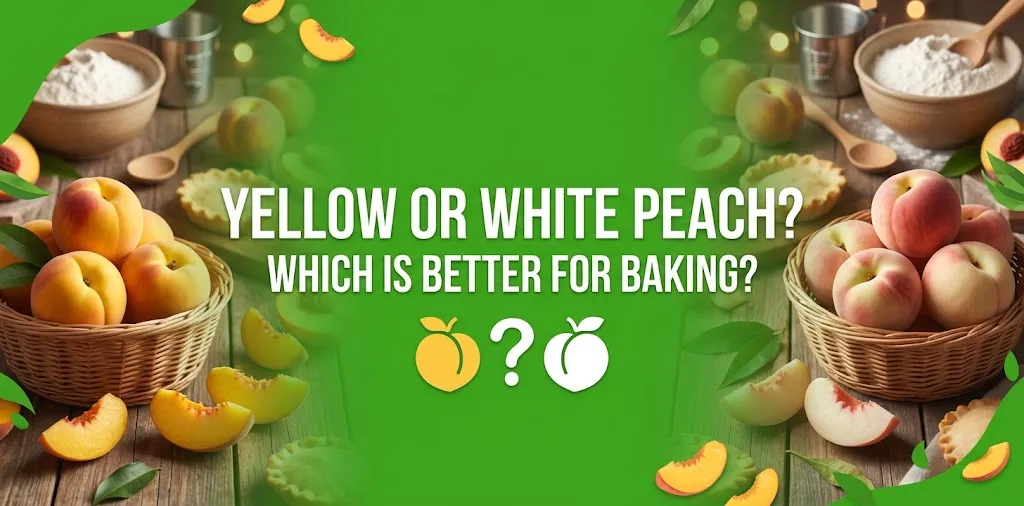
Yellow or White Peach? Which Is Better for Baking?

Yellow peaches are usually the better choice for baking because they have a stronger peach flavor, more noticeable acidity, and a good balance of sweetness and tartness. That balance works especially well in pies, cobblers, crisps, and cakes. White peaches can also be baked, but their softer, sweeter, floral flavor may become less noticeable after cooking.
When you are standing in the produce section choosing peaches for a pie or cobbler, the color of the flesh can make a difference. Yellow and white peaches are both sweet, juicy summer fruits, but they do not taste exactly the same.
For most baked desserts, yellow peaches are the safer pick. Their classic peach flavor and tart edge can stand up to sugar, butter, cinnamon, vanilla, and a pastry or biscuit topping. White peaches are still useful when you want a softer and more delicate flavor.
The choice also depends on the dessert, the ripeness of the fruit, and whether you want the peaches to remain noticeable after baking.
Yellow vs. White Peaches for Baking
The biggest difference is not simply the color. Yellow and white peaches generally have different acidity and flavor profiles.
Yellow-fleshed peaches tend to have more acidity, while white-fleshed peaches are usually lower in acid and taste sweeter and more floral. Research on peach cultivars also shows that acidity can vary widely between individual varieties, so the color alone does not tell you everything about a peach.
| Feature | Yellow Peaches | White Peaches |
|---|---|---|
| Flavor | Sweet with a noticeable tang | Sweeter, mild, and floral |
| Acidity | Generally higher | Generally lower |
| Baking flavor | Strong and classic | More delicate |
| Pies | Excellent choice | Works well |
| Cobblers | Excellent choice | Good choice |
| Crisps | Excellent choice | Good choice |
| Peach cakes | Excellent choice | Good choice |
| Fresh desserts | Excellent | Excellent |
| Best overall for baking | Yellow | Good alternative |
This does not mean white peaches are bad for baking. Both types can be substituted for one another in many recipes. The main difference is the flavor you want in the finished dessert.
Why Yellow Peaches Usually Work Better in Baked Desserts
Their acidity balances added sugar
Most peach desserts contain sugar, whether it comes from the recipe, a crumble topping, a biscuit crust, or another ingredient.
A yellow peach brings some tartness to that sweetness. This creates more contrast instead of making the entire dessert taste simply sweet.
That is one reason yellow peaches work so well in classic American peach pies and cobblers. Their stronger flavor remains noticeable alongside sugar and other rich ingredients.
Their peach flavor is more noticeable
White peaches have a gentle, floral sweetness. That can be wonderful when eating them fresh, but delicate flavors can be harder to notice once the fruit is combined with flour, butter, sugar, spices, and a baked crust.
Yellow peaches have a more pronounced peach flavor. For a dessert where peach is supposed to be the main flavor, that makes them a dependable choice.
They give traditional peach desserts a familiar taste
If you picture a classic peach cobbler with juicy fruit underneath a biscuit or cake-like topping, yellow peaches fit that style very naturally.
They provide the sweet-tart flavor many people expect from a traditional peach dessert. White peaches can create a lighter variation, but the result may taste less tangy and more floral.
When White Peaches Can Be Better
White peaches should not be ruled out just because yellow peaches are the usual baking choice.
Their lower acidity and delicate sweetness can work beautifully when you want a softer flavor.
White peaches can be a good choice for:
- A lightly sweet peach tart
- A simple peach cake
- Galettes
- Baked peaches served with yogurt or cream
- Desserts where you want a mild fruit flavor
- Recipes that already contain acidic ingredients such as lemon juice
For example, if you are making a simple summer tart with a thin pastry crust and only a small amount of added sugar, white peaches can give it a gentle floral character.
On the other hand, if you are making a heavily sweetened peach cobbler, yellow peaches may provide better flavor contrast.
Which Peach Is Better for Pie?
Yellow peaches are generally better for peach pie.
A pie filling needs enough peach flavor to remain noticeable alongside the crust, sugar, and spices. Yellow peaches’ stronger flavor and acidity make them a reliable option.
For the best texture, look for peaches that are ripe but not extremely soft. Very ripe peaches contain plenty of juice and can break down more during baking, which may leave you with a wetter filling.
A firm-ripe freestone peach is especially convenient because the pit separates easily from the flesh, making slicing and preparation easier. Freestone and clingstone describe how the flesh attaches to the pit, not whether the peach has yellow or white flesh.
Which Peach Is Better for Cobbler?
Yellow peaches are usually the better choice for cobbler.
Cobbler toppings can be sweet and rich, so the peaches need enough flavor to stand out underneath them. The sweet-tart character of yellow peaches gives the filling a more balanced taste.
White peaches can still make a good cobbler, particularly if you prefer a sweeter, less tangy filling. You may simply notice a softer peach flavor.
The style of cobbler also matters. American peach cobblers can range from biscuit-topped versions to cake-like batters, so the amount of sweetness and richness varies by recipe.
Which Peach Is Better for Crisps and Crumbles?
Yellow peaches have a slight advantage for crisps and crumbles because their flavor contrasts nicely with a buttery, sugary oat or streusel topping.
White peaches are also suitable, especially when the topping is not overly sweet.
If you use very sweet white peaches in a sweet crumble, consider keeping the filling’s added sugar modest. Taste the fruit first when possible, because peach sweetness varies by variety and ripeness.
Ripeness Matters More Than Color Alone
Choosing between yellow and white peaches is only part of the decision. The condition of the fruit can matter just as much.
A perfectly ripe white peach can produce a better dessert than a poor-quality yellow peach.
For baking, look for peaches that:
- Have a noticeable peach aroma
- Give slightly when gently pressed
- Do not have large bruised or damaged areas
- Are not rock hard
- Are not extremely soft or leaking juice
USDA guidance notes that peaches can be ripened at room temperature, with a paper bag helping speed the process, and ripe peaches should then be refrigerated.
Avoid choosing peaches based only on how red or colorful the skin looks. A reddish blush is not necessarily a sign that the peach is ripe. Aroma and texture are more useful clues.
What About Frozen or Canned Peaches?
Fresh peaches are excellent when they are in season, but frozen and canned peaches can also be useful for baking.
Frozen peaches can be convenient when fresh peaches are unavailable. They also make it easier to bake peach desserts outside the summer season.
Canned peaches are another practical option, especially for cobblers and other cooked desserts. If they are packed in syrup, remember that they can add considerable sweetness to the recipe, so the amount of additional sugar may need to be adjusted.
The important thing is to account for the extra moisture and sweetness rather than treating fresh, frozen, and canned peaches as exactly the same ingredient.
How to Make the Best Choice at the Store
If you are buying peaches specifically for a baked dessert, use this simple decision:
Choose yellow peaches if you want:
- Classic peach flavor
- More sweet-tart contrast
- A stronger fruit presence
- A traditional peach pie or cobbler
Choose white peaches if you want:
- A softer, sweeter flavor
- Floral peach notes
- Less tartness
- A lighter-tasting dessert
If both types look equally good, choose the ripe fruit with the better aroma and texture. A good peach variety cannot make up for fruit that is underripe or badly bruised.
Two Practical Baking Examples
Imagine you are making a traditional peach cobbler with a sweet biscuit topping. Yellow peaches would be the better starting point because their acidity helps offset the sweetness of the topping, while their stronger flavor keeps the fruit from getting lost.
Now imagine you are making a thin peach tart with a light pastry crust, a small amount of sugar, and a little lemon. White peaches can work very well here. Their delicate sweetness can give the tart a softer flavor, while the lemon adds some brightness.
Neither choice is wrong. The better peach depends on the balance you want in the finished dessert.
Can You Substitute White Peaches for Yellow Peaches?
Yes. In many baking recipes, white and yellow peaches can be used interchangeably.
The finished dessert may taste different, though. White peaches generally produce a sweeter, less tangy flavor, while yellow peaches give the filling a more pronounced sweet-tart peach taste.
If substituting white peaches in a recipe designed around yellow peaches, taste the fruit before adding sugar. You may prefer slightly less added sugar, depending on how sweet the peaches are.
Frequently Asked Questions
Are yellow peaches sweeter than white peaches?
Not necessarily. White peaches often taste sweeter because they have lower acidity, while yellow peaches usually have more tartness. The actual sweetness varies by variety and ripeness.
Can white peaches be used in peach pie?
Yes. White peaches can be used in peach pie, cobbler, crisps, and other baked desserts. They will generally give the filling a milder, sweeter, more floral flavor than yellow peaches.
Should peaches be firm or soft for baking?
Choose peaches that are ripe but still have some firmness. Extremely soft peaches can release a lot of juice and break down more easily during baking, while underripe peaches may lack flavor and remain firm.
Final Verdict
For most baking, yellow peaches are the better all-around choice. Their stronger peach flavor and higher acidity create a good balance with sugar and rich toppings, making them especially suitable for pies, cobblers, crisps, and crumbles.
White peaches are still worth using when you want a sweeter, gentler, floral flavor. Whatever color you choose, focus on ripe, flavorful fruit first. For a classic peach dessert, though, yellow peaches are the easiest choice.