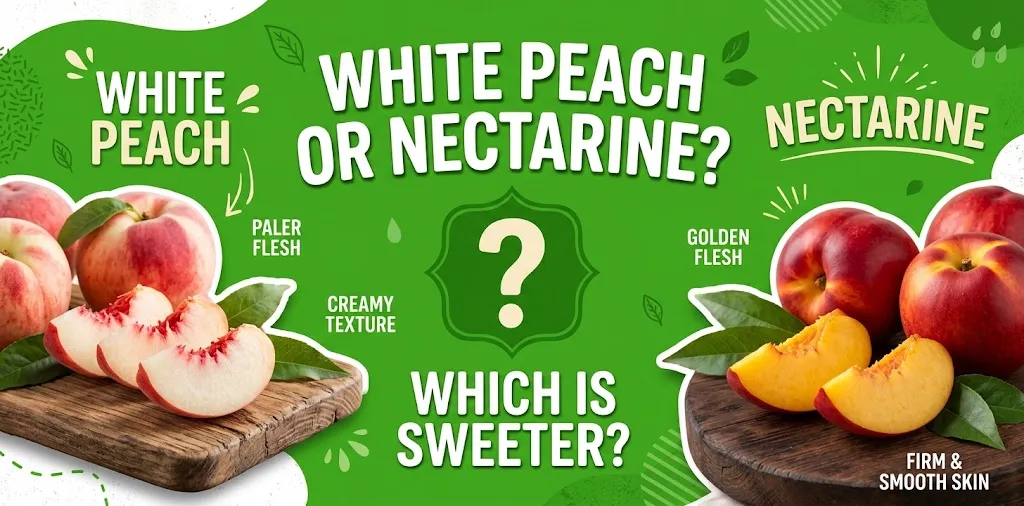
White Peach or Nectarine? Which Is Sweeter?

White peaches and white nectarines are both naturally sweet, low-acid fruits, but white nectarines often taste slightly sweeter and more intense. The difference is not consistent across every variety, though. Ripeness, cultivar, growing conditions, and acidity can affect how sweet each fruit tastes, so a ripe white peach can easily taste sweeter than an underripe nectarine.
The short answer
If your main goal is the sweetest-tasting fruit, a ripe white nectarine is often the better pick. White nectarines have been found to taste sweeter and more flavorful than white-flesh peaches in sensory comparisons, although individual varieties can vary considerably.
White peaches are still very sweet. Their lower acidity gives them a soft, honey-like sweetness with floral notes, while nectarines can offer a stronger sweet-tart flavor along with their smooth, firm texture.
White Peach vs. Nectarine: What Makes Them Taste Different?
White peaches and nectarines are closely related. Both belong to Prunus persica, and the main visible difference is the skin: peaches have fuzzy skin, while nectarines have smooth skin. Both can have white or yellow flesh.
The more useful difference for this comparison is acidity.
White-flesh peaches and nectarines generally have less acidity than their yellow-flesh counterparts. Because acidity affects how we perceive sweetness, a fruit can taste sweeter even when its measured sugar content is not dramatically higher.
| Feature | White Peach | White Nectarine |
|---|---|---|
| Skin | Fuzzy | Smooth |
| Flesh | White to creamy | White to creamy |
| Sweetness | Very sweet | Often slightly sweeter-tasting |
| Acidity | Low | Low |
| Flavor | Floral, soft, peachy | Sweet, aromatic, more intense |
| Texture | Softer and juicier when ripe | Firmer and crisp |
| Best for | Fresh eating, salads, desserts | Snacking, salads, fresh fruit plates |
Why White Nectarines Can Taste Sweeter
A white nectarine does not automatically contain more sugar than a white peach. Research comparing peach and nectarine cultivars found considerable variation in sugar levels, with no simple rule that one fruit is always higher in total sugar.
What changes the eating experience is the balance between sugar and acidity.
A fruit with strong acidity can taste tangier even when it contains plenty of sugar. White nectarines and white peaches tend to have lower acidity, which allows their sweetness to stand out more clearly.
White nectarines can also have a firmer texture and stronger aromatic character. That combination can make their flavor seem more concentrated when you bite into them.
How White Peaches Taste
White peaches are known for a gentle, fragrant sweetness. Instead of the noticeable tang found in many yellow peaches, they tend to have a softer flavor with floral and honey-like notes.
Their low acidity makes them especially pleasant when eaten fresh. They can be very juicy once fully ripe, and their softer flesh works well when you want a traditional peach texture.
A ripe white peach may be the better choice if you prefer soft, juicy sweetness rather than a firm, crisp bite.
How White Nectarines Taste
White nectarines have many of the same sweet characteristics as white peaches, but their flavor can seem brighter and more concentrated.
Their smooth skin is also edible, so there is no fuzzy texture to deal with. The flesh is usually firmer, making nectarines convenient for eating out of hand, slicing into fruit salads, or packing as a snack.
White-flesh nectarines have been described in sensory research as sweeter, more flavorful, and also somewhat more sour than white-flesh peaches. That combination is useful because the small amount of acidity can make the sweetness feel more balanced rather than simply sugary.
Which Is Sweeter: White Peach or White Nectarine?
For perceived sweetness, white nectarine has a slight edge in many comparisons. However, it is not accurate to say that every white nectarine is sweeter than every white peach.
Variety matters a lot. A perfectly ripe white peach can taste much sweeter than a firm, underripe white nectarine. Fruit maturity, growing conditions, and the specific cultivar can all influence the final flavor. Research on peach and nectarine cultivars also shows substantial variation in sugar and acidity measurements.
So, when shopping, ripeness is often more important than choosing peach versus nectarine.
How to Pick the Sweeter Fruit
Look beyond the color of the skin. A red blush does not necessarily mean that a peach or nectarine is ripe.
For the best eating experience, look for fruit with:
- A noticeable fruity aroma
- No major bruises or damaged areas
- A little softness when ripe
- Good overall weight for its size
- A fresh appearance rather than a shriveled surface
For nectarines, you can often enjoy them while they are still relatively firm. White-flesh stone fruits are naturally low in acidity, so they can taste sweet even before becoming very soft.
If a fruit is hard and has little aroma, give it more time at room temperature rather than judging its sweetness immediately.
Which Is Better for Snacking?
For a soft and juicy snack, choose a ripe white peach.
For a firmer, less messy snack, choose a white nectarine. Its smooth skin can be eaten, and the firmer flesh usually holds together well when sliced.
A simple way to decide is based on texture:
- Want soft and juicy? White peach
- Want firm and crisp? White nectarine
- Want very sweet, low-acid flavor? Either can work
- Want a slightly more intense sweet flavor? Try white nectarine
A simple example
Suppose you are packing fruit for a summer picnic. A firm white nectarine may be easier to slice and transport because it holds its shape better.
If you are eating fruit at home and prefer juice running down your hands with a soft, fragrant peach flavor, a ripe white peach may be more satisfying.
Which Is Better for Recipes?
Both fruits can be used in many of the same dishes, including fruit salads, yogurt bowls, desserts, smoothies, and fresh summer salads.
White peaches are especially appealing when you want a delicate fruit flavor. White nectarines are useful when you want slices that stay firmer and provide more texture.
For baking, the choice can depend more on the recipe than sweetness. If you want the fruit to keep some structure, nectarine can be convenient. If you want a softer, more traditional peach texture, white peach may be preferable.
Does Ripeness Change Which Fruit Is Sweeter?
Yes. Ripeness can make a major difference in how sweet peaches and nectarines taste.
As fruit matures, changes in texture, aroma, and the balance between sugars and acids affect the eating experience. However, ripening does not mean every peach or nectarine simply gains a large amount of sugar after being picked. The variety and harvest stage matter as well.
This is why comparing a ripe white peach with an underripe nectarine can give a misleading answer.
For the fairest comparison, taste both fruits when they are at a similar stage of ripeness.
White Peach or Nectarine: Which Should You Choose?
If sweetness is your only priority, start with a ripe white nectarine. It often delivers a stronger sweet impression while keeping a little acidity and a firm bite.
Choose a white peach if you want softer flesh, more delicate floral notes, and a juicy texture.
Neither is universally sweeter. Different cultivars can produce noticeably different results, so the specific fruit you buy can matter more than the general category.
Frequently Asked Questions
Are white nectarines sweeter than white peaches?
White nectarines often taste slightly sweeter and more flavorful than white peaches, but there is no universal rule. The cultivar, ripeness, sugar level, and acidity can change the result.
Do white peaches have more sugar than nectarines?
Not necessarily. Studies of different cultivars show that sugar levels vary within both peaches and nectarines, so fruit type alone does not reliably predict which one contains more sugar.
Are white peaches sweeter than yellow peaches?
White peaches generally taste sweeter because they tend to have lower acidity than yellow peaches. Yellow peaches usually have more noticeable tang, which can make their sweetness seem less pronounced.
The Bottom Line
For the sweetest overall eating experience, white nectarine gets a slight advantage, especially if you like firm fruit with an intense sweet flavor. White peach is the better choice if you prefer soft, juicy fruit with delicate floral notes.
The best tip is simple: choose the ripest fruit you can find rather than relying only on whether it is a peach or nectarine. A ripe white peach can easily beat an underripe nectarine in sweetness and flavor.