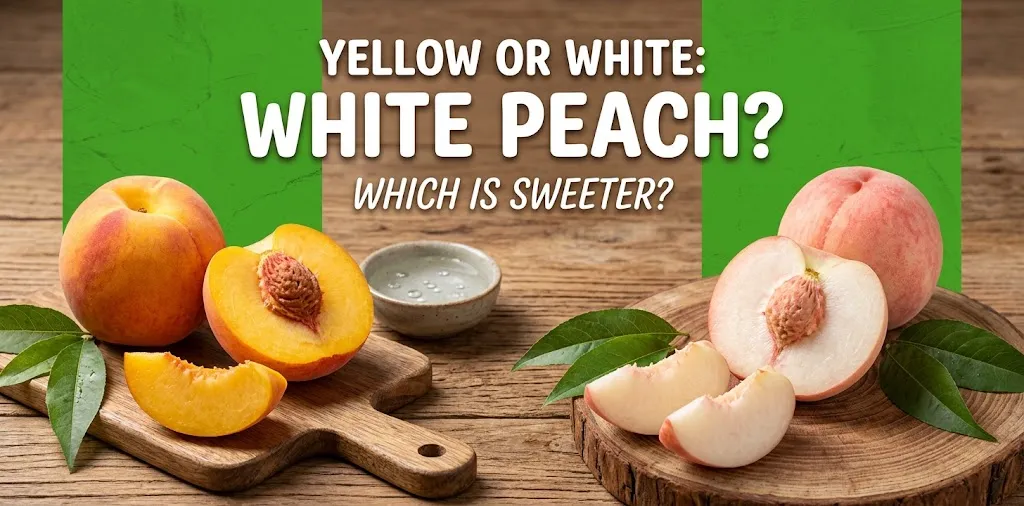
Yellow or White Peach? Which Is Sweeter?

White peaches are usually sweeter-tasting than yellow peaches. The main reason is not simply the amount of sugar; white peaches generally have lower acidity, so their natural sweetness stands out more. Yellow peaches are also sweet, but their higher acidity gives them a brighter, tangier flavor.
If you are choosing between a yellow peach and a white peach because you want the sweetest bite, white peach is usually the better choice. But that does not mean every white peach will be sweeter than every yellow peach. Variety, ripeness, growing conditions, and freshness all affect the final taste.
Why Do White Peaches Taste Sweeter?
The biggest difference between these two peaches is acidity.
White-fleshed peaches are generally low in acid. Because there is less tartness to balance the fruit’s natural sugars, the peach can taste noticeably sweeter. Their flavor is often described as soft, floral, delicate, and mellow.
Yellow peaches usually contain more acidity. That acidity creates the familiar sweet-tart flavor many people associate with a classic peach. The fruit can still be very sweet, but the tartness makes the sweetness feel less intense.
This is why a white peach can taste sweeter even when the difference in actual sugar content is not dramatic.
| Feature | White Peach | Yellow Peach |
|---|---|---|
| Sweetness | Usually sweeter-tasting | Sweet with more tang |
| Acidity | Lower | Higher |
| Flavor | Mild, floral, delicate | Strong, classic peach flavor |
| Flesh | White to pale cream | Yellow to golden |
| Best for | Fresh snacking, fruit salads, light desserts | Baking, grilling, pies, fresh eating |
White Peach vs. Yellow Peach for Sweetness
If sweetness is your main priority, white peaches have the advantage for most people.
A ripe white peach tends to have a gentle, almost honey-like sweetness with floral aromas. There is little tartness to compete with the sweetness, which makes the fruit especially enjoyable when eaten fresh. Specialty Produce also describes white peaches as low-acid with a mild, sweet, subtly floral flavor.
Yellow peaches offer a different experience. Their higher acidity gives them a stronger contrast between sweet and tart flavors. This can make them seem less sweet, but many people prefer this more balanced and traditional peach flavor.
So the choice comes down to the kind of sweetness you enjoy:
- Choose white peaches for soft, mellow, low-acid sweetness.
- Choose yellow peaches for sweet flavor with a noticeable tang.
- Choose a very ripe peach if you want the best flavor from either type.
Does Ripeness Affect Peach Sweetness?
Yes. Ripeness can make a major difference in how sweet and enjoyable a peach tastes.
A peach that is still firm and underripe may have less developed flavor and can taste more tart or bland. As it reaches eating ripeness, the fruit becomes softer, juicier, and more aromatic.
Yellow peaches can be especially noticeable in this regard because their acidity becomes more balanced as the fruit ripens. White peaches are often perceived as sweet even when they are somewhat firmer because their lower acidity keeps the flavor relatively sweet.
When shopping, don’t judge a peach only by its skin color. Look for fruit with a pleasant peach aroma and a slight amount of give when gently pressed.
Which Peach Has a Stronger Flavor?
Yellow peaches usually have the stronger, more traditional peach flavor.
Their combination of sweetness and acidity gives them a bold taste that works well when you want the peach flavor to stand out. White peaches tend to have a softer flavor with floral notes, so they can taste sweeter but less intense.
This difference matters when choosing peaches for a particular meal. If you love the classic flavor of a juicy summer peach, yellow may be more satisfying. If you prefer a gentle, sweet fruit with little tartness, white is likely to be your favorite.
Which Peach Is Better for Eating Fresh?
For fresh snacking, white peaches often have an advantage because of their sweetness and low acidity.
They are especially good when eaten plain, sliced into a fruit bowl, or served chilled. Their delicate flavor does not need much added to it.
Yellow peaches are also excellent for fresh eating. Their firmer texture and stronger sweet-tart flavor can make them a better choice if you like a more classic peach experience.
One thing to remember is that white peaches can be more delicate and prone to bruising, so handle ripe fruit gently.
Which Peach Is Better for Baking?
Yellow peaches are often the better choice for baking.
Their stronger flavor and acidity can provide useful contrast in pies, cobblers, crisps, and other desserts. Yellow peaches also tend to work well when you want the peach flavor to remain noticeable alongside ingredients such as butter, flour, cinnamon, or brown sugar.
White peaches can certainly be baked, too. They bring a sweeter and more delicate flavor, but their softer character may not provide the same contrast as a yellow peach. Both types can be used in recipes, so your choice can depend on the flavor you want.
For example, if you are making a classic peach cobbler and want a bright peach flavor, yellow peaches are a strong choice. If you are making a simple dessert where the fresh sweetness of the fruit should stand out, white peaches may work better.
How to Choose the Sweetest Peach at the Store
Color alone cannot guarantee sweetness. A white peach is generally the safer choice if you specifically prefer a sweeter-tasting peach, but you should still check the fruit’s condition.
Look for:
- A noticeable peach aroma: A fragrant peach is more likely to be ready to eat.
- Slight softness: The fruit should give gently when pressed, without feeling mushy.
- Fresh-looking skin: Avoid peaches with major bruises or damaged areas.
- Seasonal freshness: Fresh, properly ripened peaches generally have better flavor than fruit that has been stored too long.
- The right variety: Different peach cultivars can have different levels of sweetness and acidity.
If the peach is very firm, you can let it ripen at room temperature before eating it. Avoid relying only on a red blush, since skin color can vary among peach varieties.
White or Yellow Peach: Which Should You Pick?
The best choice depends on what you want from the fruit.
| If you want… | Better choice |
|---|---|
| The sweetest-tasting peach | White peach |
| Low acidity | White peach |
| Floral, delicate flavor | White peach |
| Classic peach flavor | Yellow peach |
| Sweet-tart flavor | Yellow peach |
| Fresh snacking | White peach |
| Pies and cobblers | Yellow peach |
| A stronger peach flavor | Yellow peach |
White peaches win the sweetness comparison for most taste preferences, while yellow peaches offer a more balanced sweet-and-tangy profile.
Frequently Asked Questions
Are white peaches naturally sweeter than yellow peaches?
White peaches usually taste sweeter because they have lower acidity. Their natural sugars are more noticeable because there is less tartness to balance them.
Which peach is better for someone who dislikes tart fruit?
A white peach is usually the better choice. Its lower acidity gives it a softer, sweeter taste with much less of the tart bite commonly found in yellow peaches.
Are yellow peaches sweeter when they are fully ripe?
Ripening improves the flavor and sweetness of yellow peaches, but they generally retain more acidity than white peaches. A ripe yellow peach can be very sweet while still having the tangy flavor that distinguishes it from a white peach.
The Bottom Line
If your main goal is sweetness, choose a ripe white peach. Its lower acidity usually makes the natural sugar taste more prominent, while yellow peaches provide a brighter sweet-tart flavor.
For the grocery store or farmers market, look for a fragrant peach with slight give rather than choosing only by color. A perfectly ripe yellow peach can still be deliciously sweet, but when comparing the two types specifically for sweetness, white peaches usually come out ahead.