Freestone or Clingstone Peach? Which Is Better for Baking?

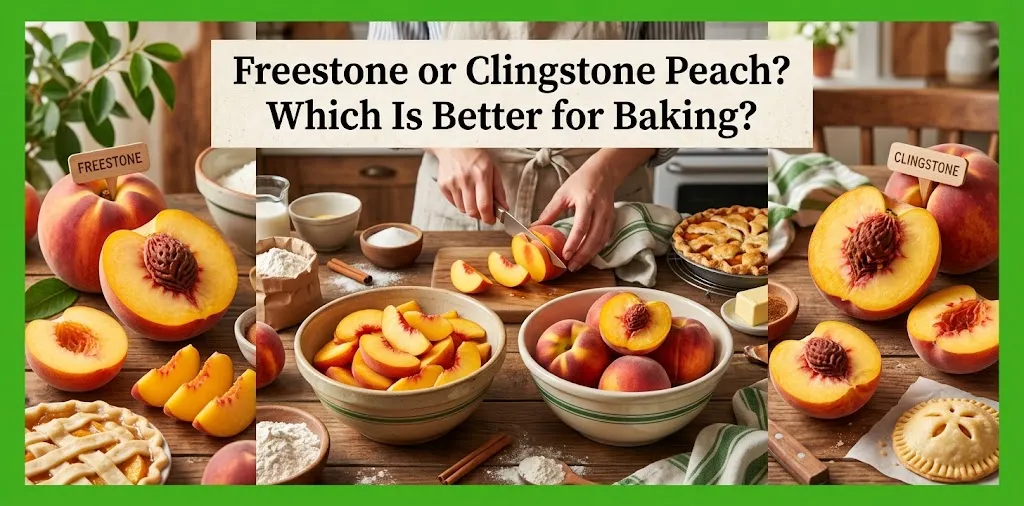
Freestone peaches are usually the better choice for baking because the flesh separates easily from the pit, making them faster to peel, slice, and prepare. They also work well when you want noticeable peach pieces in pies, cobblers, crisps, and cakes. Clingstone peaches can still bake well, especially when a softer, more jam-like filling is desired.
Freestone vs. Clingstone Peaches for Baking
The biggest difference is how the peach flesh attaches to the pit. With a freestone peach, the pit usually comes away cleanly when you cut the fruit along the seam and gently twist the halves. With a clingstone peach, the flesh stays attached to the pit, so you need to cut around it and remove more fruit by hand.
That difference matters more during baking than it might seem. Most baked peach recipes require several peaches to be peeled, pitted, and sliced. Freestone peaches make that preparation much easier and give you clean slices that can be arranged in a pie, cobbler, or tart.
Clingstone peaches are not a poor choice for baking, though. Their firm attachment to the pit is mainly a preparation issue. Depending on the variety and ripeness, they can have a juicy texture and work nicely in recipes where the peaches are cooked down.
| Feature | Freestone Peach | Clingstone Peach |
|---|---|---|
| Pit removal | Easy | More difficult |
| Slicing | Quick and clean | Takes more effort |
| Baking preparation | Easier | Slower |
| Peach pieces | Usually easier to keep intact | Can become less uniform during preparation |
| Juiciness | Varies by variety | Often juicy |
| Best for | Pies, cobblers, crisps, cakes | Sauces, preserves, and some baked desserts |
| Best choice for most home bakers | Yes | Good alternative |
Why Freestone Peaches Are Better for Most Baking
For most home baking, the main advantage of freestone peaches is convenience. Once you cut around the peach, the pit can usually be lifted out without taking much flesh with it. That gives you more usable fruit and makes it easier to create evenly sized slices.
This is especially useful when a recipe calls for several pounds of peaches. Preparing a large batch of clingstone peaches can take noticeably more time because you have to work around each pit.
Freestone peaches are also a practical choice when the appearance of the finished dessert matters. Neat slices work well in peach pies, galettes, tarts, and cakes where you want the fruit to remain recognizable after baking.
Best baked desserts for freestone peaches
Freestone peaches are a strong choice for:
- Peach pie
- Peach cobbler
- Peach crisp
- Peach crumble
- Peach tart
- Fresh peach cake
- Baked peach desserts
- Roasted or grilled peach desserts
The important point is that freestone does not automatically mean better flavor. Peach variety, ripeness, freshness, and growing conditions can have a bigger effect on flavor than whether the peach is freestone or clingstone.
When Clingstone Peaches Can Work Better
Clingstone peaches can be useful when you want a softer, more cooked-down fruit texture. Their flesh can be very juicy, and they are commonly used in processing and products such as canned peaches and preserves because they can retain desirable qualities during processing.
For home baking, they make sense when the peach pieces do not need to look perfect. A peach filling for a rustic cobbler or crumble can hide uneven slices, so the extra work of removing the pits may be less of a concern.
Clingstones can also be a good option if they are the best-quality peaches available. A flavorful, properly ripe clingstone can produce a better dessert than a bland or underripe freestone.
Does Ripeness Matter More Than Freestone or Clingstone?
Yes. The freestone label mainly tells you how easily the flesh separates from the pit. It does not tell you that the peach will automatically have the best flavor or baking texture.
For many baked desserts, choose peaches that are ripe and fragrant but still have enough firmness to handle slicing. Very soft peaches can release a lot of juice and lose their shape during baking.
This matters particularly for pies and cobblers. A peach that is already extremely soft before it goes into the oven may produce a looser filling than you want.
A slightly firm, ripe peach is often easier to work with when you want visible pieces of fruit. Peach quality can also vary by cultivar; the terms freestone and clingstone describe flesh-to-pit attachment rather than every characteristic of the fruit.
Freestone or Clingstone for Peach Pie?
Choose freestone if you have the option. Removing the pits is easier, and you can cut the peaches into more consistent slices for the filling.
That said, clingstone peaches can still make a good peach pie. If they are particularly flavorful and ripe, the extra preparation can be worth it. Just expect to spend more time cutting the flesh away from the pits.
For either type, avoid relying on the peach label alone. A flavorful, ripe peach with good texture is more important than choosing a specific pit type.
Freestone or Clingstone for Peach Cobbler and Crisp?
Freestone is generally the easier choice for both. Cobbler and crisp recipes usually call for sliced peaches, so easy pit removal saves preparation time.
There is also a useful distinction here: the peach does not have to remain perfectly firm to make a good cobbler or crisp. If you prefer a softer, more jammy fruit layer, a ripe clingstone can work well. If you want distinct peach pieces throughout the dessert, choose a firm, ripe freestone.
For a large batch of peaches, the convenience of freestone becomes even more valuable. A cooking guide from ThermoWorks similarly recommends freestone peaches when you have many peaches to prepare for cobbler.
How to Choose Peaches for Baking
When shopping for peaches in the United States, look beyond the freestone or clingstone label.
Look for peaches that:
- Have a fresh peach aroma
- Feel heavy for their size
- Have no obvious bruises or damaged areas
- Give slightly when gently pressed
- Are ripe but not overly soft
- Have good color for their variety
If you are buying from a farmers market or farm stand, ask whether the peaches are freestone, clingstone, or semi-freestone. Semi-freestone peaches can offer a middle ground because the pit becomes easier to remove while retaining some characteristics associated with clingstone peaches.
If you are unsure about the peach’s ripeness, remember that peaches can continue to soften after harvest, but their sugar level does not increase after harvest in the same way it does while the fruit is ripening on the tree.
A Simple Choice for Different Baking Needs
Your best choice depends on the dessert and the texture you want.
| If you’re making… | Better choice | Why |
|---|---|---|
| Peach pie | Freestone | Easier slicing and clean pieces |
| Peach cobbler | Freestone | Faster preparation and easy slicing |
| Peach crisp | Freestone | Convenient for preparing many slices |
| Peach cake | Freestone | Easy to cut into consistent pieces |
| Peach tart | Freestone | Cleaner, more attractive slices |
| Peach sauce | Either | Pit type matters less after cooking |
| Peach preserves | Clingstone can work well | Appearance of individual slices matters less |
| Very soft peach filling | Either | A softer texture can be desirable |
Two Practical Baking Examples
Imagine you are making a peach pie for a family gathering and need several peaches. A freestone variety will save preparation time because you can remove each pit quickly and slice the fruit into similar pieces. That makes freestone the practical choice.
Now imagine you are making a rustic peach crumble and only have flavorful clingstone peaches available. There is no need to abandon the recipe. You can cut the flesh from around the pits and use the pieces in the filling. The finished crumble can still be excellent because neat peach slices are less important than they are in a tart or pie.
Frequently Asked Questions
Are freestone peaches sweeter than clingstone peaches?
Not necessarily. Freestone and clingstone describe how the flesh attaches to the pit, not a fixed sweetness level. Flavor depends on the peach variety, growing conditions, ripeness, and other factors.
Can you use clingstone peaches for peach pie?
Yes. Clingstone peaches can be used for peach pie, although removing the flesh from the pit takes more work. If the peaches are flavorful and ripe, they can produce a very good pie.
Are freestone peaches better for baking than eating fresh?
Freestone peaches are convenient for both uses, especially when you want to cut the fruit into slices or halves. For baking, their easy pit removal gives them an extra practical advantage, but the best peach still depends on its flavor and ripeness.
The Bottom Line
For most baking, freestone peaches are the better choice. Their easy-to-remove pits make preparation faster, reduce wasted fruit, and make it easier to produce clean slices for pies, cobblers, crisps, and cakes.
But don’t reject a good clingstone peach just because the pit is harder to remove. If the fruit is ripe, flavorful, and in good condition, it can still make a delicious baked dessert. When choosing between two similar peaches, pick the freestone for convenience; when choosing between a great clingstone and a poor-quality freestone, choose the better peach.