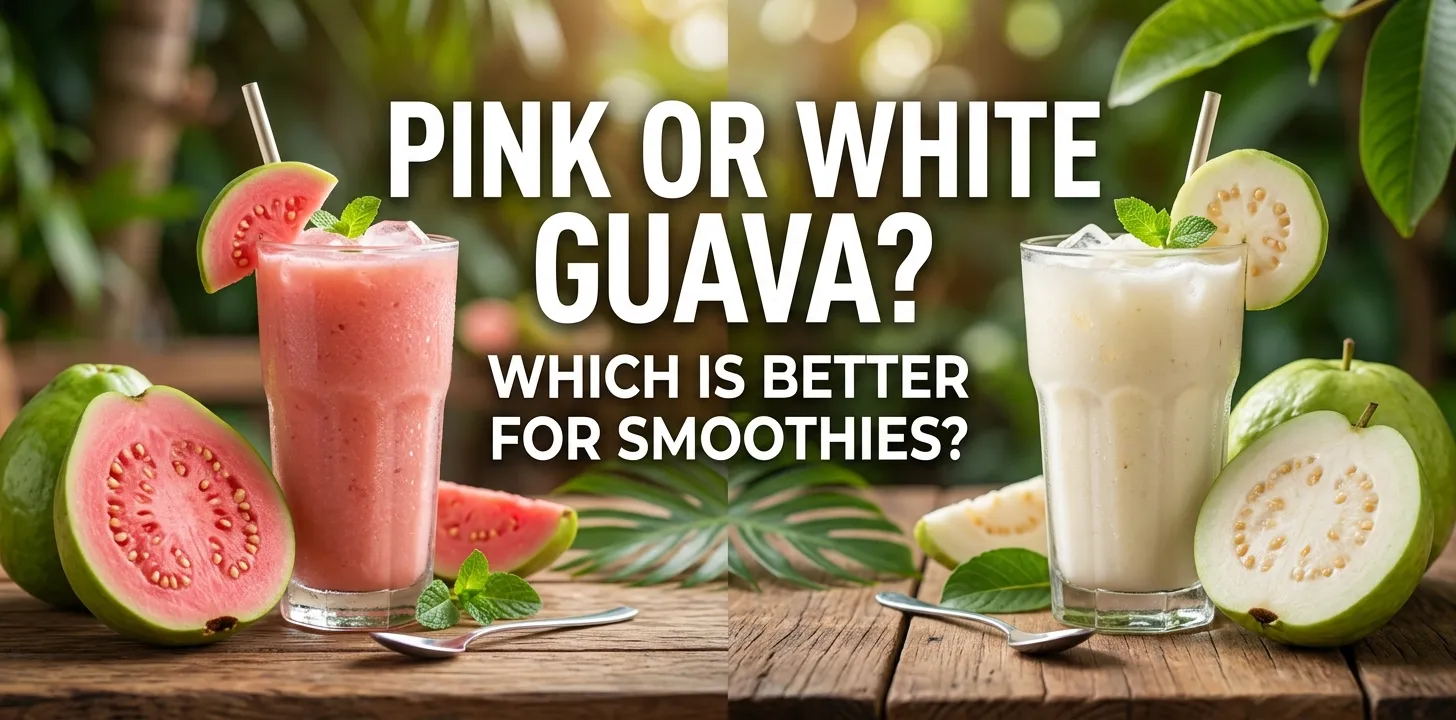
Pink or White Guava? Which Is Better for Smoothies?

If you are choosing between pink and white guava for a smoothie, pink guava is usually the better pick because it tends to have a softer, juicier texture and a stronger tropical aroma that blends well with other fruits. White guava is still a good option when you want a milder, slightly tangy flavor and a firmer fruit texture.
Pink Guava vs. White Guava for Smoothies
The biggest difference is not simply the color. The two types can vary in flavor, texture, aroma, and how they behave when blended.
| Feature | Pink Guava | White Guava |
|---|---|---|
| Flavor | Sweet, aromatic, tropical | Mild, lightly sweet, slightly tangy |
| Texture | Softer and juicier | Firmer and sometimes slightly gritty |
| Aroma | Strong and fragrant | More subtle |
| Smoothie color | Pink to reddish | Pale cream or off-white |
| Blending | Usually easier | May need more blending |
| Best smoothie style | Fruity, tropical, flavorful | Mild, creamy, refreshing |
| Best pairings | Pineapple, strawberry, mango, yogurt | Banana, apple, pear, citrus |
Pink guava is often used in juices and smoothies because its strong aroma and juicy flesh give a drink more noticeable guava flavor. White guava can also work well, especially when you want the other ingredients to remain more prominent.
Why Pink Guava Usually Wins
Pink guava has an advantage when the goal is a smoothie with a strong fruit flavor. Its softer flesh can be easier to puree, while its aroma gives the finished drink a more tropical character.
It also adds a natural pink color, which can make a simple smoothie look more appealing without adding food coloring.
A ripe pink guava works especially well with pineapple, mango, yogurt, strawberries, or other tropical fruits. Commercial smoothie recipes also commonly use pink guava puree with yogurt and other fruit flavors.
When White Guava May Be Better
White guava makes sense when you do not want the guava flavor to dominate the smoothie.
Its flavor is generally milder, and the flesh can be firmer and somewhat crisp or gritty. That texture is excellent for eating fresh, but depending on the fruit, you may need to blend the smoothie longer for a smoother result.
White guava can be a good choice with banana, pear, apple, plain yogurt, or other mild ingredients.
Which Guava Tastes Better in a Smoothie?
For most people, pink guava is the more flavorful smoothie choice. It is commonly described as sweeter, more aromatic, and more tropical, while white guava tends to have a lighter flavor with some tartness.
However, sweetness can vary with the variety and ripeness of the fruit. A ripe white guava can still make an excellent smoothie, so color alone should not determine your choice.
If you want a smoothie that tastes strongly of guava, choose pink. If you prefer a more subtle fruit flavor, white may be a better fit.
Which Guava Makes a Smoother Smoothie?
Pink guava generally has the edge.
Its softer and juicier flesh tends to work naturally in blended drinks. White guava can be firmer and slightly gritty, so its texture may be more noticeable after blending.
Seeds can also affect the final texture. Guava seeds are edible but quite hard, so blending alone may not always produce a completely silky drink. If you want an especially smooth smoothie, strain the blended guava through a fine-mesh strainer after blending.
For a Thick Smoothie
Pink guava pairs well with:
- Greek yogurt
- Banana
- Frozen mango
- Oats
- Chia seeds
- A small amount of milk or plant milk
For a Lighter Smoothie
White guava can work nicely with:
- Pineapple
- Apple
- Pear
- Orange
- Coconut water
- Ice
The best combination depends on whether you want guava to be the main flavor or just one part of the drink.
Does Guava Color Matter for Nutrition?
Both pink and white guavas provide useful nutrients, including vitamin C and dietary fiber. Their exact nutrient levels can vary by variety and growing conditions, so it is better not to treat every pink or white guava as nutritionally identical.
Pink-fleshed guava gets its color partly from carotenoid pigments, including lycopene. White guava has much less of these pigments, which is why its flesh remains pale.
For a smoothie, though, nutrition is only one consideration. Taste, ripeness, texture, and how easily the fruit blends can have a bigger effect on the drink you actually enjoy.
How to Choose Guava for a Smoothie
The ripeness of the guava can matter as much as the variety.
Look for fruit that:
- Has a strong, pleasant guava aroma
- Gives slightly when gently pressed
- Does not have large soft or damaged areas
- Looks fresh rather than dried out
- Is ripe enough to have developed its characteristic flavor
A very firm guava may have a less developed flavor and tougher texture. A fruit that is overly soft or damaged may not give the best result.
For smoothies, ripe fruit is usually the better choice because it tends to provide more aroma, flavor, and a softer texture.
Two Simple Smoothie Pairings
Pink Guava and Pineapple
For a bright tropical smoothie, combine ripe pink guava with pineapple, plain yogurt, and ice. The pineapple adds acidity and sweetness while the guava provides the main tropical aroma.
If the smoothie is too thick, add a little water or milk until it reaches the texture you like.
White Guava and Banana
For a milder and creamier drink, blend ripe white guava with banana, yogurt, and a little milk. The banana softens the tart edge of the guava and gives the smoothie a naturally creamy texture.
These are flexible combinations rather than fixed recipes. Adjust the liquid and fruit amounts based on the ripeness and size of your guavas.
Pink or White Guava: Which Should You Choose?
Choose pink guava if your main goal is a flavorful, colorful, tropical smoothie with a strong guava character.
Choose white guava if you prefer a milder taste or already have white guavas available and want to combine them with other fruits.
| If you want… | Better choice |
|---|---|
| Strong guava flavor | Pink guava |
| More tropical aroma | Pink guava |
| Natural pink color | Pink guava |
| Softer, juicier flesh | Pink guava |
| Mild guava flavor | White guava |
| Slightly tangy taste | White guava |
| A smoothie where other flavors stand out | White guava |
The difference is not absolute because guava varieties and ripeness can vary. A perfectly ripe white guava can produce a better smoothie than an underripe pink guava.
Frequently Asked Questions
Is pink guava sweeter than white guava for smoothies?
Pink guava is generally perceived as sweeter and more aromatic, while white guava often has a milder, slightly tangy flavor. Ripeness and variety can change the actual taste, so the difference is not always the same.
Do you need to remove guava seeds before making a smoothie?
You do not necessarily have to remove them, but guava seeds can remain noticeable because they are hard. For a smoother drink, blend the fruit well and strain the smoothie if the seeds or texture bother you.
Can you use white guava instead of pink guava in a smoothie?
Yes. White guava works well in smoothies, especially with banana, pineapple, yogurt, or other fruit. Expect a lighter color and generally milder guava flavor than you would get from pink guava.
The Bottom Line
For most smoothie recipes, pink guava is the better overall choice because its soft texture, strong aroma, tropical flavor, and natural pink color make it especially suited to blended drinks. White guava is a good alternative when you want a milder, slightly tangy smoothie.
A practical tip: choose a ripe guava over an underripe one, regardless of color. Ripeness can make a bigger difference to the final smoothie than whether the flesh is pink or white.