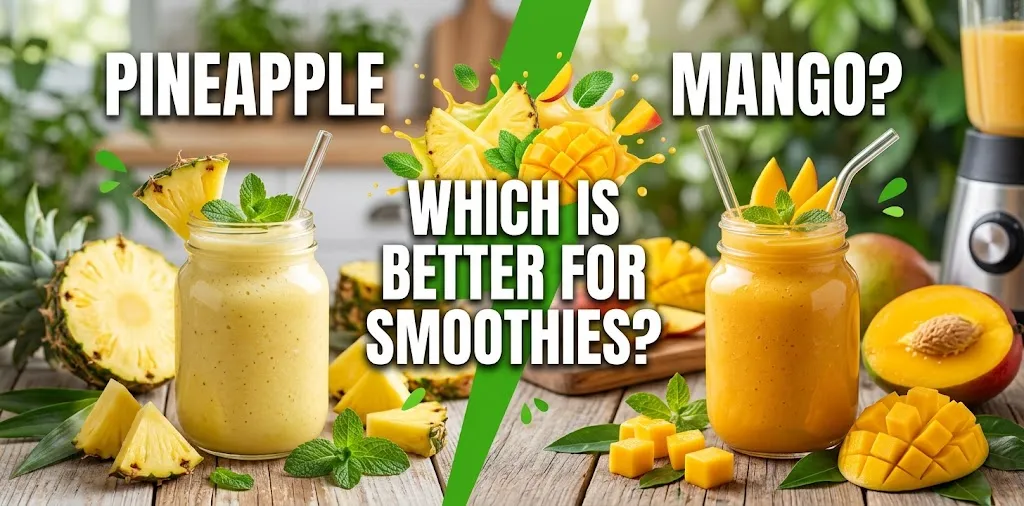
Pineapple or Mango? Which Is Better for Smoothies?

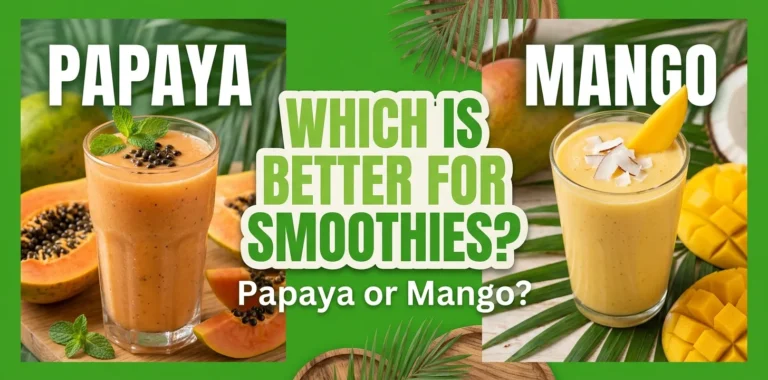
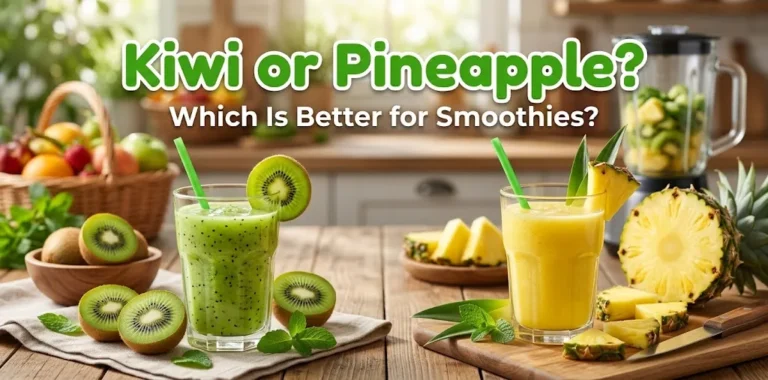
For most smoothies, mango is the better choice if you want a thick, creamy, naturally sweet drink, while pineapple is better if you prefer a lighter, brighter, tangy flavor. Mango also pairs especially well with yogurt or banana. For the best tropical smoothie, combining the two gives you both creamy sweetness and refreshing acidity.
Mango vs. Pineapple for Smoothies
Mango and pineapple can both make excellent smoothies, but they behave differently in the blender. Mango tends to add body and a soft, creamy texture, while pineapple brings more acidity and a juicy, refreshing taste.
Current smoothie recipes commonly use frozen mango and pineapple together because the fruits balance each other well. Frozen fruit also helps create a thicker smoothie without relying on large amounts of ice.
| Factor | Mango | Pineapple |
|---|---|---|
| Texture | Thick and creamy | Juicy and lighter |
| Flavor | Sweet, mellow, tropical | Sweet-tart and bright |
| Best for | Creamy smoothies | Refreshing smoothies |
| With yogurt | Excellent | Very good |
| With banana | Excellent | Good |
| With coconut | Excellent | Excellent |
| Flavor intensity | Smooth and rich | Sharp and refreshing |
| Best choice for thickness | Mango | Pineapple |
| Best choice for tang | Pineapple | Pineapple |
When Mango Is Better
Mango is the stronger choice when your main goal is a thick, smooth, sweet smoothie.
Frozen mango works particularly well because it adds body without requiring much extra liquid. It also has a mild tropical flavor that blends easily with banana, Greek yogurt, milk, coconut milk, or other fruit.
Choose mango when you want:
- A creamy texture
- A naturally sweet fruit flavor
- A smoothie that feels more substantial
- A good match for Greek yogurt
- A softer tropical flavor
- A smoothie bowl with a thick consistency
If you’re making a breakfast smoothie with yogurt and banana, mango is usually the easier fruit to build around.
When Pineapple Is Better
Pineapple is a better choice when you want your smoothie to taste bright, tangy, and refreshing.
Its sharper flavor can keep a smoothie from tasting too heavy, especially when combined with creamy ingredients such as yogurt, coconut milk, or banana.
Choose pineapple when you want:
- A refreshing tropical flavor
- More tartness
- A lighter-tasting smoothie
- A good match for coconut
- A fruit-forward drink
- A way to balance sweeter fruits
Pineapple can be especially useful when the other ingredients are rich or very sweet.
Which Makes a Smoother, Thicker Smoothie?
Mango usually wins for thickness and creaminess.
Frozen mango creates a dense texture that works well in smoothies and smoothie bowls. Pineapple contains more juicy, fibrous pieces and tends to give a more refreshing, less creamy result unless you balance it with ingredients such as banana, yogurt, or another thick fruit.
Using frozen fruit is one of the simplest ways to improve smoothie texture. Several current recipes recommend frozen mango, frozen pineapple, or both for a thicker result.
If your smoothie is too thin, adding more frozen mango is often more useful than simply adding more ice.
Which Tastes Sweeter in a Smoothie?
Mango generally gives the smoothie a softer, sweeter taste, while pineapple adds more tartness.
The actual sweetness depends on how ripe the fruit is and whether you’re using fresh, frozen, canned, or sweetened ingredients. That’s why it’s better to taste the smoothie before adding honey, maple syrup, or another sweetener.
For example, a smoothie made with ripe mango, banana, and Greek yogurt can taste naturally sweet without much added sweetener. Pineapple can provide a sharper contrast that makes the overall drink taste more refreshing.
Which Is Better With Other Smoothie Ingredients?
The better fruit depends on what else you’re putting in the blender.
Mango + Banana
This is a good combination when you want a thick, sweet smoothie. Both fruits contribute body and work well with milk, yogurt, or plant-based milk.
Pineapple + Coconut
This combination gives a classic tropical flavor. Coconut milk or coconut water can soften pineapple’s sharper taste while keeping the drink refreshing.
Mango + Greek Yogurt
Mango works especially well with Greek yogurt because its sweetness balances the yogurt’s tang. The result can be thick and creamy.
Pineapple + Orange
Pineapple and orange create a bright, citrusy smoothie. This is a good option when you want something refreshing rather than rich.
Mango + Pineapple
If you cannot decide between the two, use both.
Mango provides sweetness and body, while pineapple adds acidity and freshness. Recipes from Food Network and other current recipe sources use the combination as a tropical smoothie base.
Fresh or Frozen: Which Is Better?
For most smoothies, frozen fruit is the more practical choice.
Frozen mango and pineapple make the drink cold and thick without requiring as much ice. Fresh fruit can still work, but you may need ice or another frozen ingredient to get the same chilled texture.
Frozen fruit is also convenient because you can keep it available for smoothies without waiting for fresh fruit to ripen.
If you use canned pineapple, drain it first. Extra liquid can make the smoothie thinner than intended.
Which Is Better for a Breakfast Smoothie?
Mango is usually the better starting point for a creamy breakfast smoothie.
Its texture works well with Greek yogurt, milk, banana, oats, or nut butter. However, fruit alone does not necessarily make a smoothie filling. A more substantial breakfast smoothie can include a protein-rich ingredient such as Greek yogurt or another appropriate protein source. Current dietitian guidance also emphasizes combining fruit with protein, fiber, or healthy fats when the goal is a more filling smoothie.
For example, a simple combination could be:
- Frozen mango
- Banana
- Greek yogurt
- Milk or an unsweetened milk alternative
- Chia seeds or oats, if desired
Which Is Better for a Refreshing Smoothie?
Pineapple has the edge for a light and refreshing smoothie.
Its sweet-tart flavor stands out, especially when blended with coconut water, orange, lime, or other fresh fruit.
If you are making a smoothie on a hot day and do not want something that tastes too rich, pineapple is a strong choice.
Can You Use Mango and Pineapple Together?
Absolutely. In fact, using both is often better than choosing only one.
A simple starting ratio is:
- 1 cup frozen mango
- 1 cup frozen pineapple
- ½ to 1 cup milk, coconut water, or another liquid
- ½ banana, optional
- Greek yogurt, optional
Blend until smooth and add liquid gradually if needed. Adding too much liquid at once can make the smoothie watery, so current recipes recommend adjusting the liquid in small amounts.
You can also change the ratio based on your preference. Use more mango for sweetness and thickness or more pineapple for tang and freshness.
Which One Should You Choose?
The simplest answer is:
- Choose mango for creamy, thick, sweet smoothies.
- Choose pineapple for bright, tangy, refreshing smoothies.
- Choose both for a balanced tropical smoothie.
For a breakfast smoothie, I’d start with mango. For a hot-weather refresher, I’d lean toward pineapple. If you want a tropical flavor that combines both qualities, mango and pineapple together are hard to beat.
Frequently Asked Questions
Is mango or pineapple better for a creamy smoothie?
Mango is generally better for a creamy smoothie because frozen mango adds body and a soft texture. Greek yogurt or banana can make it even thicker.
Can I put mango and pineapple together in a smoothie?
Yes. Mango and pineapple complement each other well, with mango adding sweetness and body while pineapple provides a bright, tangy flavor. Frozen versions of both fruits work especially well.
Should I use fresh or frozen mango and pineapple for smoothies?
Frozen fruit is usually the easiest choice when you want a cold, thick smoothie. Fresh fruit also works, but you may need ice or another frozen ingredient to achieve a similar texture.
The Bottom Line
Mango is the better all-around choice for a thick, creamy smoothie, while pineapple is the better pick for a bright and refreshing one. If you want the best balance, combine frozen mango and pineapple, then add your liquid slowly until you reach the texture you like.
A useful tip: start with less liquid than you think you need. It is much easier to thin a thick smoothie than to fix one that has become watery.