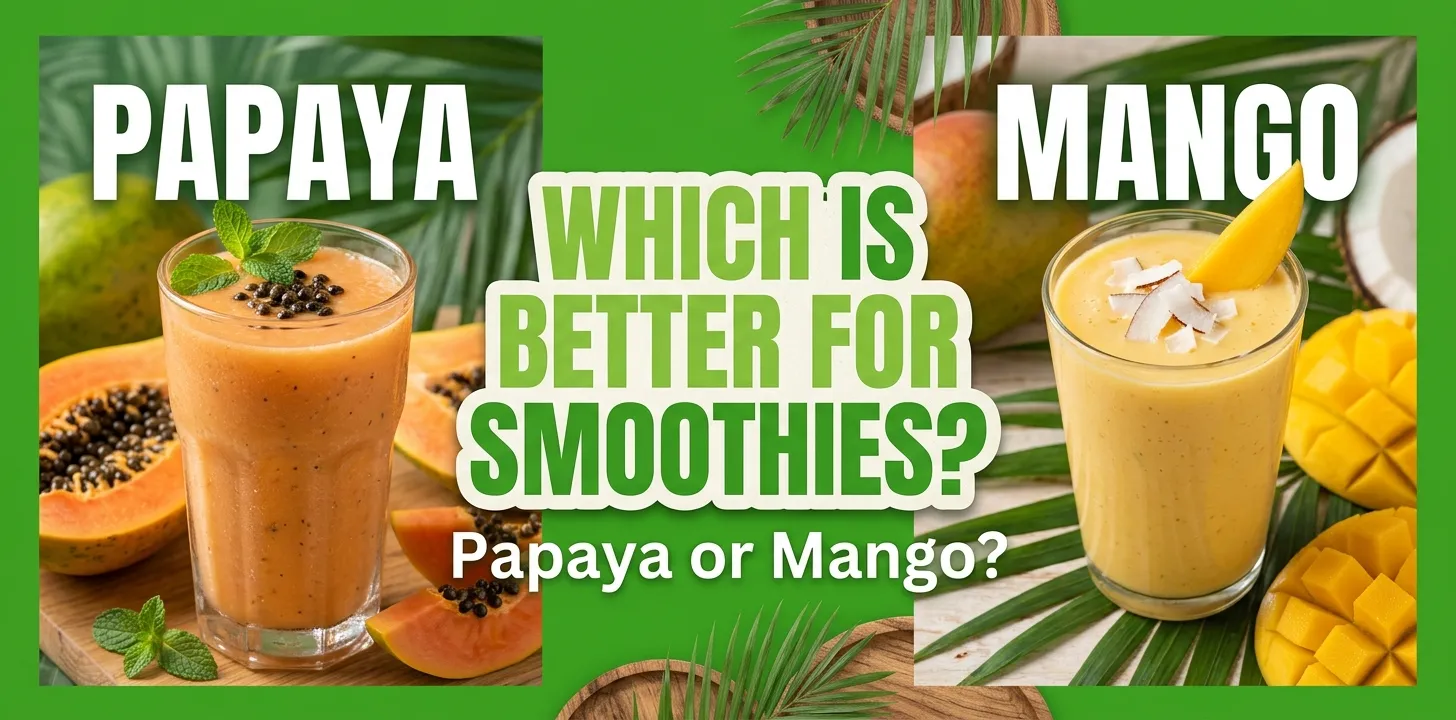
Papaya or Mango? Which Is Better for Smoothies?

If you want a smoothie with a bold, sweet tropical flavor, mango is usually the better choice. Its thick, juicy flesh gives smoothies strong flavor and body. Papaya is softer and milder, with a creamy texture and a distinct aroma. The better fruit depends on whether you want stronger sweetness or a gentler, creamier blend.
Mango vs. Papaya for Smoothies
Both fruits work well in smoothies, but they behave differently once blended. Mango tends to bring more noticeable sweetness and tropical flavor, while ripe papaya creates a softer, smoother base.
| Factor | Mango | Papaya |
|---|---|---|
| Flavor | Sweet, fruity, tropical | Mild, sweet, slightly musky |
| Texture | Thick and smooth when ripe | Very soft and creamy |
| Sweetness | Usually stronger | More subtle |
| Smoothie body | Excellent | Excellent |
| Aroma | Fruity and fragrant | More distinctive |
| Works with tart fruits | Excellent | Good |
| Works with creamy ingredients | Excellent | Excellent |
| Best for | Flavorful tropical smoothies | Mild, creamy smoothies |
Mango is better for a stronger tropical flavor
Mango has a naturally bold flavor, so it can remain noticeable even when blended with yogurt, milk, or other fruits. That makes it a good choice when you want the fruit itself to be the main flavor.
It also works especially well with ingredients such as pineapple, orange, lime, strawberries, coconut milk, and plain or Greek yogurt.
USDA SNAP-Ed lists one cup of mango pieces at about 99 calories, with 25 grams of carbohydrates, 3 grams of fiber, and 67 mg of vitamin C.
Papaya is better for a mild, creamy smoothie
Ripe papaya has very soft flesh, so it blends easily. Its flavor is less intense than mango, which can be useful when you want a smoothie that tastes smooth and mellow rather than strongly fruity.
Papaya can pair well with lime, orange, pineapple, coconut, yogurt, and other tropical ingredients.
Raw papaya contains about 43 calories per 100 grams, along with about 1.7 grams of fiber and 10.8 grams of carbohydrates.
Which Fruit Makes a Thicker Smoothie?
Both can make a thick smoothie, but mango is often easier to use when you want a thick, scoopable consistency.
Frozen mango is especially convenient because it can add body and coldness without requiring much ice. Papaya can also create a creamy smoothie, but its softer flesh can produce a different, almost silky texture.
If your smoothie is too thin, try:
- Using frozen fruit instead of fresh fruit
- Reducing the amount of liquid
- Adding plain Greek yogurt
- Adding a small amount of nut or seed butter
- Blending in a little more frozen fruit
Adding too much juice or milk is one of the easiest ways to make a smoothie watery.
Which Tastes Sweeter: Mango or Papaya?
Mango generally tastes sweeter and more intense than papaya.
Mango has a rich, fragrant flavor that can make a smoothie taste naturally sweet. Papaya is also sweet when ripe, but its flavor is more delicate and can have a noticeable musky quality.
That difference matters if you are making a simple smoothie with only a few ingredients.
For example, a smoothie made with mango, Greek yogurt, and milk will usually have a stronger fruit flavor. A smoothie made with papaya, yogurt, and lime will have a softer tropical taste with more room for the other ingredients to stand out.
Which Is Better With Other Smoothie Ingredients?
Your choice can change depending on what else goes into the blender.
Mango pairs well with
Mango is a strong match for:
- Pineapple
- Strawberries
- Orange
- Lime
- Banana
- Coconut milk
- Greek yogurt
- Oat milk
- Orange juice
Its strong flavor makes it useful when a smoothie contains several ingredients.
Papaya pairs well with
Papaya works nicely with:
- Lime
- Orange
- Pineapple
- Coconut milk
- Yogurt
- Banana
- Ginger
- Other mild tropical fruits
Because papaya has a gentler flavor, acidic ingredients such as lime or citrus can help give the smoothie more contrast.
Should You Use Fresh or Frozen Fruit?
For smoothies, frozen mango is often the easiest choice, especially when you want a cold, thick drink without adding much ice.
Fresh papaya works well when it is ripe and soft. Frozen papaya can also be used, and recipes commonly use frozen tropical fruit when fresh fruit is unavailable.
A useful approach is to keep frozen mango or papaya pieces in the freezer so you can make a smoothie without waiting for fruit to chill.
If using fresh fruit, chill it first when possible. This can give you a colder smoothie without relying heavily on ice.
Can You Mix Papaya and Mango in the Same Smoothie?
Yes. Papaya and mango work very well together. Mango provides the stronger tropical sweetness, while papaya adds softness and a creamy texture.
Recipes commonly combine the two fruits with ingredients such as yogurt, milk, citrus juice, or ice.
A simple combination is:
- ½ cup ripe mango
- ½ cup ripe papaya
- ½ cup milk or unsweetened plant milk
- ¼ cup plain yogurt
- A squeeze of fresh lime
- A few ice cubes, if needed
Blend until smooth and adjust the liquid to reach the consistency you like.
You do not need to add honey or other sweeteners automatically. Taste the fruit first because ripe mango and papaya already provide natural sweetness.
Which Is Better for Different Smoothie Goals?
There is no single winner for every smoothie.
| If you want… | Better choice |
|---|---|
| Strong tropical flavor | Mango |
| Mild fruit flavor | Papaya |
| A naturally sweet smoothie | Mango |
| Soft, creamy texture | Papaya |
| A simple 2–3 ingredient smoothie | Mango |
| A gentle base for other flavors | Papaya |
| A tropical fruit combination | Both |
| A thick frozen smoothie | Mango |
| A smooth, silky texture | Papaya |
The variety and ripeness of the fruit also matter. A ripe, flavorful papaya can be better than a bland mango, and vice versa.
How Ripeness Changes the Result
Ripeness is one of the biggest factors in smoothie quality.
An underripe mango can taste sour and firm, while a ripe mango is much softer and sweeter. Papaya also needs to be ripe before it develops the soft texture and sweet flavor that make it useful in smoothies.
For either fruit, choose pieces that are ripe and fragrant rather than hard and underripe.
If fresh fruit is not at its best, frozen fruit can be a practical alternative. It also helps produce a cold smoothie without depending on large amounts of ice.
Which One Should You Choose?
Choose mango if flavor and sweetness are your top priorities. It is the better all-around option for a bold tropical smoothie and is especially easy to combine with other fruits.
Choose papaya if you prefer a softer, creamier, milder smoothie. Its subtle flavor can work well when you want yogurt, citrus, coconut, or another ingredient to share the spotlight.
And if you cannot decide, use both. A mango-papaya smoothie combines the stronger sweetness of mango with papaya’s soft texture, making a balanced tropical drink.
Frequently Asked Questions
Is mango or papaya better for a healthy smoothie?
Both can fit into a nutritious smoothie. Mango provides vitamin C and fiber, while papaya is also relatively low in calories and provides fiber and vitamin C.
Can I use frozen mango and papaya for smoothies?
Yes. Frozen mango and papaya can both be blended directly into smoothies and can help make the drink cold and thick. You may need less ice when using frozen fruit.
Does papaya taste good with mango in a smoothie?
Yes. Mango and papaya have complementary flavors and textures. Mango gives the smoothie a stronger tropical taste, while papaya makes the blend softer and creamier.
The Bottom Line
For most people, mango is the better choice when making a smoothie because it delivers stronger sweetness, bold tropical flavor, and excellent thickness. Papaya is the better pick when you want something milder and creamier.