Green or Yellow Banana? Which Is Better for Banana Bread?

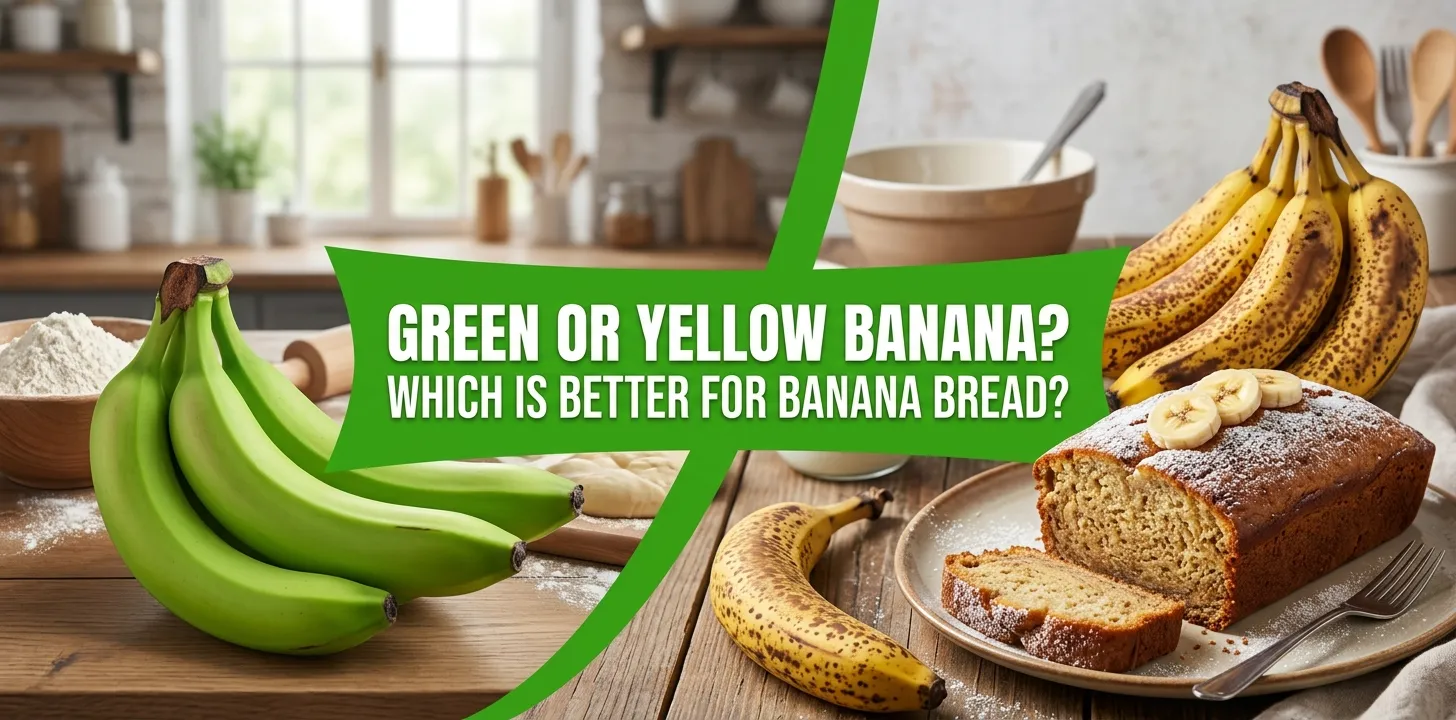
For most banana bread recipes, yellow bananas that are fully ripe—and especially yellow bananas with brown spots—are better than green bananas. They are softer, sweeter, and easier to mash, giving the loaf more banana flavor and moisture. Green bananas contain more starch and less of the sweetness that makes classic banana bread taste rich.
The important detail is that “yellow” can mean different things. A yellow banana with green around the stem is very different from a soft, yellow banana covered with brown spots. For banana bread, the second one is usually the better choice.
Why Ripe Yellow Bananas Work Better
As bananas ripen, some of their starch is converted into sugars. Research on banana ripening shows a clear shift in starch and sugar levels as the fruit moves from unripe to ripe stages.
That change matters when you bake banana bread.
A ripe banana gives you:
- More natural sweetness
- Stronger banana flavor
- A softer texture
- Easier mashing
- More moisture in the finished loaf
A green banana is firm and starchy, so it does not blend into the batter as easily. The result can be a loaf with less banana flavor and a less tender texture.
What About Yellow Bananas With No Brown Spots?
They can work, but they are usually not your best option.
A bright yellow banana that is still firm is ripe enough for eating, but it may not have developed the deep sweetness and soft texture that bakers want. King Arthur Baking recommends very ripe bananas for especially flavorful banana bread and notes that bananas with brown or black spotting are well suited to baking.
If your bananas are yellow but still firm, letting them ripen longer will usually improve the result.
Green vs. Yellow Bananas for Banana Bread
| Feature | Green banana | Ripe yellow banana |
|---|---|---|
| Sweetness | Low | Higher |
| Starch | Higher | Lower |
| Texture | Firm | Soft |
| Easy to mash | No | Yes |
| Banana flavor | Mild | Stronger |
| Moisture contribution | Lower | Higher |
| Best for classic banana bread | Not ideal | Better |
So if you are standing in a U.S. grocery store deciding which bananas to buy for a weekend loaf, choose ripe yellow bananas with brown spots rather than green ones.
Are Brown-Spotted Bananas Even Better?
Usually, yes.
For banana bread, a banana that looks too soft or spotted to eat out of hand can be exactly what you want in the batter. As the fruit ripens, its texture becomes softer and its flavor becomes more concentrated.
You do not need to throw away bananas just because the peel has turned very brown or even nearly black. The outside color alone does not mean the fruit is spoiled.
However, there is a limit. Do not use a banana if it has visible mold, an unusual fermented or alcoholic smell, or other clear signs of spoilage.
Can You Make Banana Bread With Green Bananas?
Yes, but it is not the easiest route to traditional banana bread.
Green bananas are much firmer and more starchy than ripe ones. If you use them directly, you should expect less sweetness and a less pronounced banana flavor.
If you need to bake immediately, there are ways to soften and sweeten underripe bananas. For example, King Arthur Baking has a banana bread method that roasts yellow bananas with brown sugar before they go into the batter. The heat softens the fruit and helps create a more concentrated flavor.
That is different from simply putting completely green bananas into a standard banana bread recipe.
What If Green Bananas Are All You Have?
If you have time, the simplest choice is to wait.
Leave the bananas at room temperature and let them become softer and more heavily spotted. Once they are easy to mash and smell strongly of banana, they are much better suited to classic banana bread.
If you need the bread today, look for a recipe specifically designed to work with less-ripe bananas rather than assuming every banana bread recipe will produce the same result.
What Banana Ripeness Should You Choose?
Think of banana ripeness as a range rather than simply “green” or “yellow.”
Green:
Too firm and starchy for most traditional banana bread recipes.
Yellow with green tips:
Fine for eating, but usually not sweet or soft enough for the best banana bread.
Yellow with a few brown spots:
A very good choice for banana bread.
Yellow with many brown spots:
Usually excellent for baking, with stronger flavor and more softness.
Very brown or black peel:
Can be excellent if the inside still looks and smells normal and there are no signs of spoilage.
What If Your Bananas Are Already Frozen?
Frozen ripe bananas can work very well for banana bread.
When ripe bananas are frozen and later thawed, they become very soft, which makes them easy to mash. King Arthur Baking recommends including the liquid from thawed bananas when using them in its banana bread guidance.
For a recipe that calls for a specific amount of mashed banana, measuring the banana after peeling and mashing can help you stay close to the recipe’s intended balance.
Two Common Banana Bread Situations
Imagine you have two bananas on your kitchen counter.
Situation 1: Two firm, bright-yellow bananas
They are easy to peel and look perfect for eating. But if you use them immediately, the bread may have a lighter banana flavor and less natural sweetness.
Situation 2: Two soft bananas covered with brown spots
They may look past their prime for snacking, but they are much better suited to a classic banana bread batter. They mash easily and provide the stronger banana flavor most people expect.
That is why many banana bread recipes specifically call for ripe or overripe bananas.
The Best Choice for Different Results
If your goal is classic, sweet, moist banana bread, choose ripe yellow bananas with brown spots.
If you want a milder banana flavor, less-ripe yellow bananas can work.
If you only have green bananas, consider waiting for them to ripen or using a recipe designed around underripe fruit.
If you want maximum banana flavor, very ripe bananas are generally the better choice, as long as they are not spoiled. King Arthur Baking goes even further, noting that very dark bananas can produce especially sweet and assertive banana flavor.
Frequently Asked Questions
Can you use green bananas for banana bread?
Yes, but green bananas are less sweet, firmer, and more starchy than ripe bananas. For traditional banana bread, waiting until they ripen will usually give you a better flavor and texture.
Are yellow bananas good for banana bread?
Yes, especially when the yellow bananas are soft and have brown spots. Firm yellow bananas can work, but they generally provide less sweetness and banana flavor than ripe, spotted fruit.
How brown should bananas be for banana bread?
Brown spots are a good sign that bananas are ready for baking. Very dark peels can also be fine if the inside has no mold, unusual fermented smell, or other signs of spoilage.
The Bottom Line
For most banana bread, ripe yellow bananas with brown spots beat green bananas. They provide the softness, sweetness, moisture, and banana flavor that make a classic loaf satisfying.
If your bananas are still green, the best move is usually to wait. A little patience can give you much better banana bread than trying to force unripe fruit into a recipe.