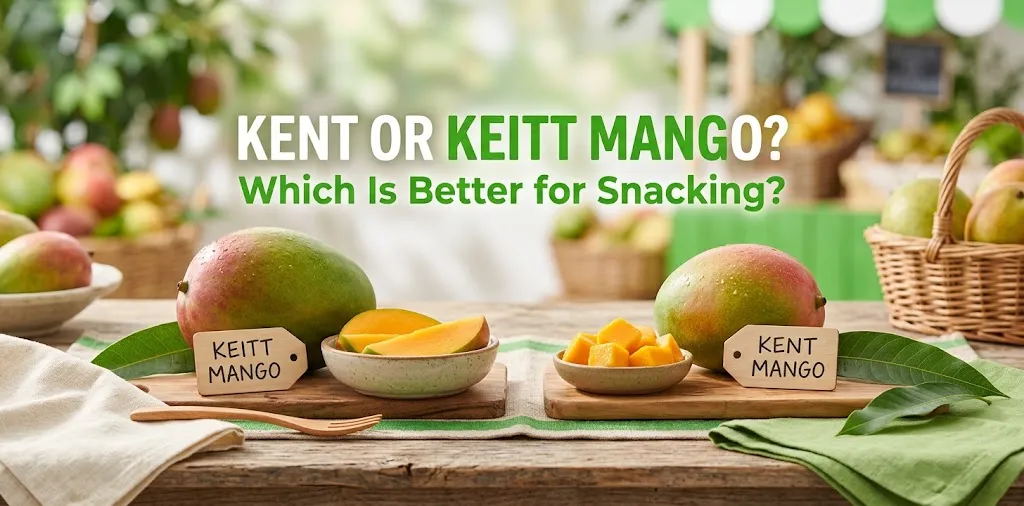
Kent or Keitt Mango? Which Is Better for Snacking?

If you want a mango mainly for fresh snacking, Kent is usually the better choice for a sweeter, richer, more aromatic bite, while Keitt is better if you prefer firm, juicy flesh with a brighter citrus tang. Both have relatively low fiber, but their flavor and texture make the eating experience different.
| Feature | Kent | Keitt |
|---|---|---|
| Flavor | Sweet, rich, tropical | Sweet, mild, citrusy |
| Texture | Juicy, tender | Firm, juicy |
| Fiber | Limited | Limited |
| Aroma | Stronger tropical and peach notes | Lighter citrus aroma |
| Skin when ripe | Green with red blush; yellow undertones develop | Mostly stays green |
| Best for | Sweet fresh snacking | Firm slices and fresh snacking |
| Main advantage | Richer dessert-like flavor | Firm texture and refreshing tang |
Kent: Better for a Sweet, Rich Snack
Kent is a strong pick if your ideal snack mango is juicy, tender, sweet, and strongly tropical. The National Mango Board describes Kent as having a sweet flavor with some sour notes, a peach-and-tropical-fruit aroma, and juicy flesh with limited fiber.
That combination makes Kent especially enjoyable when eaten plain. You can slice it into pieces, cut it into cubes, or eat the flesh directly with a spoon once it is ripe.
Kent also has a useful advantage for shoppers: its skin can remain dark green, but yellow undertones and small dots become more noticeable as it ripens. A gentle squeeze is a better ripeness test than relying only on skin color.
For someone who wants a mango that feels more like a dessert fruit, Kent gets the edge.
Keitt: Better for Firm, Juicy Slices
Keitt takes a different approach. Its flesh is firm and juicy, with limited fiber, and its flavor combines sweetness with noticeable citrus notes.
That firmer texture is useful when you like mango slices that hold their shape instead of becoming very soft. Keitt can also be a good choice for people who prefer a refreshing sweet-tart flavor rather than a very rich sweetness.
One thing often confuses shoppers: a ripe Keitt can still look green. The National Mango Board recommends gently squeezing the fruit to judge ripeness rather than waiting for the skin to turn yellow or orange.
So if you see a large green Keitt at a U.S. grocery store, don’t assume it is unripe just because the skin hasn’t changed color.
How Kent and Keitt Taste Side by Side
The biggest difference is not simply sweetness. Kent tends to have a richer, more tropical flavor, while Keitt has a cleaner, brighter sweet-tart profile.
Kent’s flavor is described as sweet with sour notes and peach and tropical-fruit aromas. Keitt has a sweet, fruity flavor with higher citrus notes and a lighter aroma.
This creates two different snacking experiences:
- Choose Kent if you want a rich, aromatic mango.
- Choose Keitt if you want a firm, juicy mango with citrusy freshness.
- Choose either if you strongly dislike stringy mango flesh, since both are known for relatively low fiber.
Which Mango Has Better Texture for Snacking?
For most people, Kent has the advantage when fully ripe and eaten as a soft, juicy snack. Keitt has the advantage if you like your mango a little firmer.
Kent’s flesh is described as juicy and tender with limited fibers. Keitt has firm, juicy flesh with limited fibers.
That distinction matters more than it may sound.
Imagine cutting mango for an afternoon snack. If you want soft pieces that almost melt as you chew, a ripe Kent is a good fit. If you want slices that stay firm enough to pick up easily, Keitt may be more satisfying.
Both can work well in a lunchbox, fruit bowl, or simple snack plate.
Which One Is Easier to Tell When Ripe?
Kent is somewhat easier to judge by appearance, although squeezing is still useful.
Kent can develop yellow undertones and more visible dots as it ripens. Keitt, on the other hand, can remain mostly green even when fully ripe.
For both varieties, look for a slight amount of give when you gently press the fruit. Don’t squeeze hard, because bruising can damage the flesh.
With Keitt in particular, remember that green skin does not automatically mean an unripe mango.
When Is Kent Available Compared With Keitt?
Availability can influence which one is the better snack simply because mango varieties have different seasons.
The National Mango Board lists Kent as having peak availability in January, February, and December, while Keitt has peak availability in March–April and August–September. Actual store availability can vary because U.S. mangoes are sourced from different producing regions.
So you may prefer Kent but find Keitt more easily at certain times of year.
If you’re shopping specifically for a good snacking mango, choosing a ripe fruit is more important than insisting on one variety every time.
Which Is Better for Different Types of Snackers?
| If you prefer… | Better choice |
|---|---|
| Rich tropical flavor | Kent |
| Peach-like aroma | Kent |
| Soft, tender flesh | Kent |
| Firm slices | Keitt |
| Citrus-like tang | Keitt |
| A milder aroma | Keitt |
| Low-fiber mango flesh | Both |
| Easy-to-handle ripe slices | Keitt |
| Dessert-like fresh eating | Kent |
These are preference-based differences, not strict rules. A perfectly ripe Keitt can be an excellent snack, just as a ripe Kent can be enjoyed by someone who prefers a firmer mango.
Kent vs. Keitt: Which Should You Buy?
For a plain fresh snack, I’d give Kent the overall edge.
Kent’s sweet, rich tropical flavor and tender, juicy flesh make it especially appealing when the goal is simply to cut up a mango and eat it. The National Mango Board specifically lists Kent as ideal for snacking, along with juicing and drying.
Keitt is the better pick if your priority is firmness and a brighter citrus flavor. Its large, juicy pieces also hold together well when sliced.
A simple rule works well:
Want richer and sweeter? Buy Kent. Want firmer and tangier? Buy Keitt.
Two practical snack examples
Example 1: Afternoon fruit snack
You want a soft, sweet mango to eat with a fork. A ripe Kent is likely the better match because of its tender texture and rich tropical flavor.
Example 2: Sliced mango for a lunchbox
You want pieces that remain firm and easy to pick up. A ripe Keitt may work better because its flesh is firm and juicy.
Frequently Asked Questions
Is Kent sweeter than Keitt mango?
Kent generally has a richer, sweeter-tasting profile with tropical and peach-like aroma notes. Keitt is also sweet but tends to have a more noticeable citrusy, sweet-tart character.
Which mango has less fiber, Kent or Keitt?
Both Kent and Keitt are considered low-fiber mango varieties. Their flesh is much less stringy than varieties with more noticeable fibers, making either one a good choice for fresh eating.
How can you tell when a Keitt mango is ripe?
Don’t wait for a Keitt mango to turn yellow or orange. Its skin can remain mostly green when ripe, so gently press the fruit and look for a slight give.
The Bottom Line
Kent is the better overall choice for snacking if you prefer sweet, rich, tropical flavor and tender flesh. Keitt wins if you prefer firm, juicy slices with a refreshing citrus tang. Both varieties offer relatively low-fiber flesh, so the final choice mostly comes down to flavor and texture preference.
One practical tip: judge the fruit by ripeness, not just skin color—especially with Keitt, which can stay green even when ready to eat.