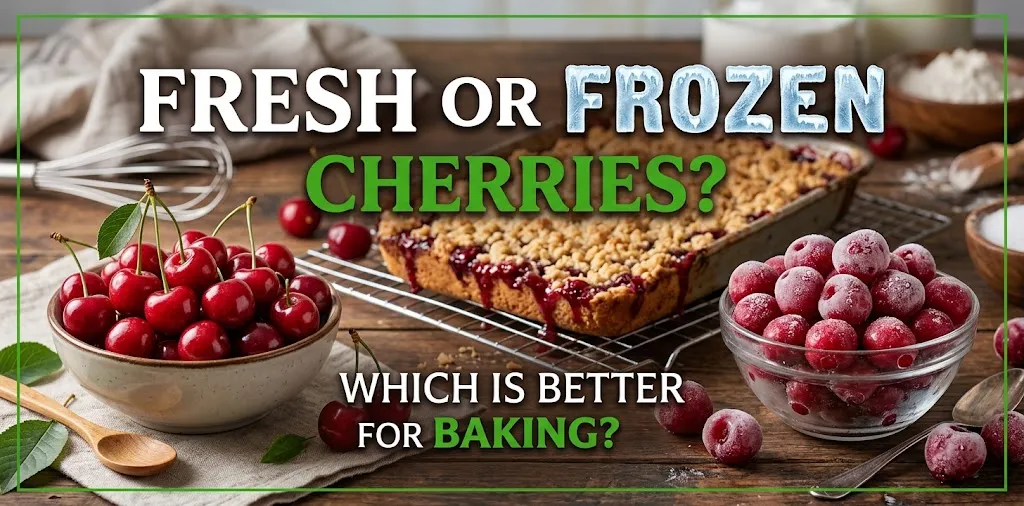
Fresh or Frozen Cherries? Which Is Better for Baking?

Fresh and frozen cherries can both work very well for baking, but frozen cherries are often the more practical choice for pies, cobblers, crisps, and other fruit desserts. They are available year-round, usually come pitted, and can produce a rich, juicy filling. Fresh cherries are a better pick when you want firmer fruit, a bright seasonal flavor, and attractive whole cherry pieces.
Fresh vs. Frozen Cherries for Baking
The better choice depends on the dessert and what matters most to you. Fresh cherries give you more control over texture, while frozen cherries save preparation time and make cherry baking possible outside the short fresh-cherry season.
| Factor | Fresh Cherries | Frozen Cherries |
|---|---|---|
| Flavor | Bright and fresh | Rich and concentrated |
| Texture | Usually firmer | Softer after baking |
| Availability | Seasonal | Available year-round |
| Preparation | Must be washed and pitted | Usually already pitted |
| Liquid | Less added moisture | Can release more juice |
| Best for | Cakes, tarts, crisps, pies | Pies, cobblers, crisps, fillings |
| Convenience | More prep | Very convenient |
| Cost | Can be higher when out of season | Often practical year-round |
Fresh cherries
Fresh cherries are especially appealing during cherry season. They tend to hold their shape better during baking, which can give a pie, tart, or crisp a more distinct fruit texture.
The main drawback is preparation. You need to remove the pits, and a large batch can take some time.
Fresh cherries also vary in sweetness. Taste them before adding sugar so you can adjust the filling to match the fruit.
Frozen cherries
Frozen cherries are a strong choice when convenience matters. Most frozen cherries sold for baking are already pitted, so you can skip one of the most time-consuming parts of preparing fresh cherries.
They also make cherry desserts possible throughout the year. Some bakers even prefer frozen cherries for cobbler because they can produce a particularly juicy, rich filling. Food Network’s testing for its cherry cobbler found frozen cherries gave the preferred filling texture and flavor, while also noting that fresh cherries work with recipe adjustments.
The trade-off is texture. Freezing breaks down some of the fruit’s structure, so thawed cherries generally won’t stay as firm as fresh ones.
Which Is Better for Cherry Pie?
For cherry pie, both can work well, but the best choice depends on the recipe.
Fresh cherries are excellent when you want firmer fruit and a classic seasonal pie. Frozen cherries are useful when fresh cherries are unavailable or you want to make pie outside cherry season.
The biggest issue with frozen cherries is their extra moisture. Depending on the recipe, you may need to drain thawed cherries or adjust the thickener so the filling does not become too loose. Recipes vary: some specifically call for thawed and drained frozen cherries, while others are designed to use them directly from frozen.
Best choice: Fresh for peak-season pie; frozen for convenience and year-round baking.
Which Is Better for Cherry Cobbler?
Frozen cherries have a slight advantage for cobbler, especially when convenience and a juicy filling are priorities.
Food Network’s cherry cobbler testing compared fresh and frozen cherries and found frozen cherries produced the preferred lush flavor and velvety texture. Its recipe also explains how to adapt the filling for fresh cherries.
However, fresh cherries are still a great option. They can hold their shape better and give the finished cobbler a more distinct fruit texture.
If you use frozen cherries, follow the specific recipe’s instructions about thawing. Some recipes call for thawing and draining, while others recommend baking the cherries while still frozen and adding a little baking time.
Which Is Better for Cherry Crisp or Crumble?
For cherry crisp or crumble, either type works well.
Fresh cherries give you a slightly firmer filling and bright flavor. Frozen cherries are easier and can provide plenty of juice for the filling. Recent cherry crisp recipes commonly provide instructions for both forms, showing that neither option is limited to a particular style of dessert.
For a frozen-cherry crisp, pay attention to excess liquid. If the recipe tells you to thaw and drain the cherries, do so. Too much free liquid can make the filling thinner than intended.
Do You Need to Thaw Frozen Cherries Before Baking?
Not always. The correct method depends on the recipe.
Some recipes specifically use frozen cherries without thawing them. For example, The Kitchn recommends using frozen cherries directly from the freezer for one cobbler recipe and extending the baking time by several minutes.
Other recipes call for thawing and draining the fruit first. This is useful when controlling excess liquid is important.
A simple rule is:
- Recipe says use frozen: Follow its instructions exactly.
- Recipe says thaw and drain: Do not skip that step.
- Adapting a fresh-cherry recipe: Check whether the recipe needs additional thickener or baking time.
Avoid automatically treating every frozen-cherry recipe the same way.
How Fresh and Frozen Cherries Affect Baking
The main difference is water and texture.
Fresh cherries generally enter the oven with a firmer structure. Frozen cherries have already gone through freezing and thawing, which can make them softer and cause more juice to appear during cooking.
That does not mean frozen cherries are worse. In desserts such as cobbler and crumble, extra juice can actually be desirable. The key is balancing that liquid with enough thickener and the right baking method.
For example, a cherry cobbler recipe may use more cornstarch with frozen fruit or instruct you to drain thawed cherries. Other recipes are specifically designed around the moisture released by frozen fruit.
Fresh or Frozen Cherries for Cakes and Muffins?
Fresh cherries are usually the better choice when you want visible cherry pieces and a firmer bite. They can look attractive when folded into cakes, muffins, or tarts.
Frozen cherries can still work, but excess moisture may affect the batter. Thawing and draining may be appropriate if the recipe calls for it.
If using frozen cherries in a cake or muffin recipe written for fresh fruit, avoid making large changes without checking the recipe. A recipe developed specifically for frozen fruit is usually the safer option.
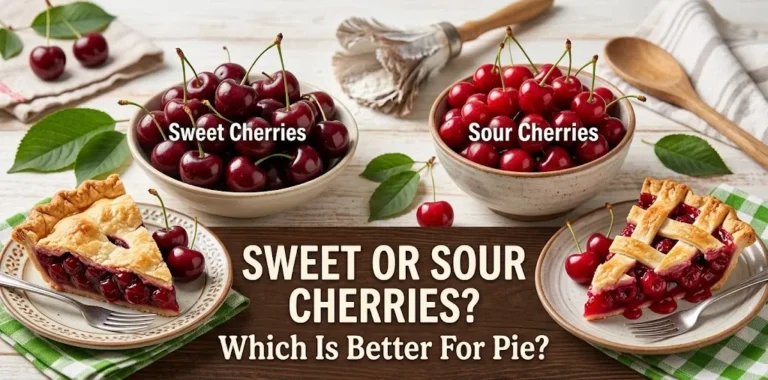
What About Sweet vs. Sour Cherries?
The type of cherry can matter just as much as whether it is fresh or frozen.
Sweet cherries, such as Bing or Rainier, are common for eating and work well in many desserts. Sour cherries have a sharper flavor and are especially valued in traditional pies and other baked desserts.
Because sour cherries contain much more tartness, recipes usually need more sugar than recipes using sweet cherries. The Kitchn notes that sugar amounts need adjustment when switching between sweet and sour cherries.
So if a recipe specifies sour cherries, simply replacing them with sweet cherries—or vice versa—may change the final flavor significantly.
How to Choose the Right Cherries for Baking
Use this quick guide:
- Making a summer dessert: Fresh cherries are a great choice.
- Baking in winter: Frozen cherries are usually easier.
- Want less prep: Choose frozen, preferably pitted.
- Want firmer fruit: Choose fresh.
- Making cobbler: Frozen can be especially convenient and flavorful.
- Making crisp or crumble: Either works.
- Making pie: Either works if the filling is adjusted properly.
- Making a cake or tart: Fresh can provide better fruit texture and appearance.
- Need cherries on short notice: Frozen is usually the simplest option.
Two Practical Baking Examples
If you’re making cherry cobbler in January
Fresh cherries may be expensive or unavailable in good condition. A bag of frozen, pitted cherries can make more sense because you can keep them in the freezer and use them whenever you want.
Follow the recipe’s instructions for thawing. If it calls for frozen cherries to go directly into the baking dish, don’t thaw them just because another recipe does.
If you’re making a cherry tart during summer
Fresh cherries may be worth the extra pitting time. Their firmer texture can make the fruit look better when the cherries remain visible on top or inside the tart.
If the tart recipe cooks the filling before baking, frozen cherries can still be an excellent option. Some tart recipes specifically use frozen cherries because they are convenient and available year-round.
The Best Choice Depends on the Dessert
There is no single winner for every baked cherry dessert.
Choose fresh cherries when texture, appearance, and seasonal flavor are your priorities. Choose frozen cherries when convenience, availability, and a juicy filling matter more.
For many home bakers, frozen cherries are the better everyday option because they eliminate pitting and let you bake cherry desserts year-round. Fresh cherries are worth choosing when they are in season and you want their firmer texture and fresh character.
Frequently Asked Questions
Are frozen cherries as good as fresh cherries for baking?
Yes. Frozen cherries can work very well in pies, cobblers, crisps, crumbles, and fillings. They may become softer than fresh cherries, but that softer texture is often perfectly suited to fruit desserts.
Should I drain frozen cherries before baking?
It depends on the recipe. Some recipes require thawing and draining to control excess liquid, while others are designed to use frozen cherries without thawing. Follow the method written for that particular recipe.
Are fresh or frozen cherries better for cherry cobbler?
Frozen cherries can have an advantage for cobbler because they are convenient and can produce a rich, juicy filling. Fresh cherries are also excellent and may hold their shape better, so the better choice depends on the texture you want.
Final Takeaway
For most home baking, frozen cherries are the easiest all-purpose choice, especially for cobblers, crisps, and pies made outside cherry season. Fresh cherries are the better pick when you want firmer fruit and a fresh seasonal taste.
Expert tip: Don’t change the thawing or thickener instructions blindly. Frozen cherries can release a different amount of liquid than fresh cherries, so the recipe’s specific method matters more than the simple fresh-versus-frozen label.