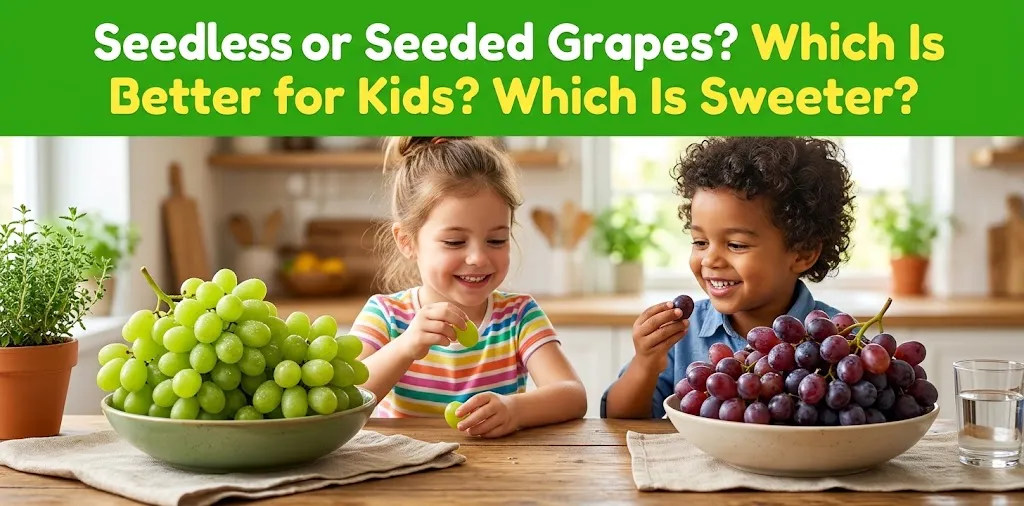
Seedless or Seeded Grapes? Which Is Better for Kids?

For most kids, seedless grapes are the better everyday choice because they are easier to eat and do not require removing seeds. However, seedless does not mean safe to serve whole. Grapes can be a choking hazard for young children because of their round, firm shape. For toddlers and younger children, grapes should be cut into small pieces and served while the child is seated and supervised.
Seedless vs. Seeded Grapes for Kids
Both types can be part of a balanced diet, but they are not equally convenient for children. Seedless grapes are usually easier for kids to chew and eat without stopping to remove seeds. Seeded grapes can still be enjoyed, but the seeds may make snack time less convenient, especially for younger children.
| Feature | Seedless Grapes | Seeded Grapes |
|---|---|---|
| Ease of eating | Easier | Requires dealing with seeds |
| Convenience for snacks | Excellent | Less convenient |
| Kid-friendly texture | Usually easier | Depends on variety |
| Seed removal | Not needed | Needed |
| Nutrition | Nutritious fruit choice | Nutritious fruit choice |
| Choking concern | Still a concern when whole | Still a concern when whole |
| Best use | Everyday kids’ snacks | Older kids who can manage seeds |
The biggest difference is convenience, not nutrition. Seedless grapes are bred so their seeds are extremely small or not noticeable when eating, while seeded varieties contain more noticeable seeds.
Why Seedless Grapes Are Often Better for Kids
Seedless grapes are a simple choice when you want a fruit that a child can enjoy without having to spit out or remove seeds.
For school-age children who can safely chew grapes, seedless varieties can make snack preparation easier. They also work well in lunch boxes, fruit bowls, and simple after-school snacks.
Another benefit is that kids may be more willing to eat grapes when they do not have to deal with seeds. This can make seedless grapes a practical option for parents who want to offer more whole fruit without adding extra preparation.
That said, seedless does not remove the main safety issue with grapes. The round shape of a whole grape can still create a choking risk for young children. The CDC specifically lists uncut grapes among potential choking hazards.
Are Seeded Grapes Healthy for Kids?
Yes. Having seeds does not automatically make a grape unhealthy. The fruit itself can provide nutrients and water as part of a varied diet. USDA guidance includes grapes among foods in the fruit group.
The main issue with seeded grapes is practical. A child may need to remove the seeds before eating, and younger children may have more difficulty doing this safely and comfortably.
For that reason, seeded grapes may make more sense for older children who can handle them easily. For younger kids, seedless grapes are generally simpler to prepare.
Which Grapes Are Safer for Toddlers?
Neither seedless nor seeded grapes should be served whole to toddlers simply because one type has fewer noticeable seeds.
The shape and size of the grape are the bigger concern. The CDC recommends cutting small, round foods such as grapes into small pieces for young children. It also recommends preparing foods according to a child’s developmental ability and supervising children while they eat.
The American Academy of Pediatrics also advises against giving young children whole grapes and recommends modifying round, firm foods by cutting them into very small pieces.
When preparing grapes for a young child:
- Wash the grapes before serving.
- Remove seeds when using a seeded variety.
- Cut grapes into small pieces appropriate for the child’s development.
- Have the child sit upright while eating.
- Stay nearby and supervise during snack time.
- Avoid letting a young child eat grapes while walking, playing, or riding in a car.
If you are unsure how grapes should be prepared for your child’s age or eating skills, ask the child’s pediatrician or feeding professional.
Seedless Grapes vs. Seeded Grapes for School Lunches
For school-age kids, seedless grapes usually have a clear convenience advantage.
A child can grab a prepared portion without worrying about seeds. This makes them easy to pack alongside foods such as cheese, yogurt, sandwiches, or other fruit.
For younger children, the grapes should still be prepared according to their eating skills before being packed. A lunch box does not make whole grapes safer.
For older kids who can chew and manage grapes appropriately, either variety can work. The choice can then come down to taste and convenience.
Do Seeded Grapes Taste Better?
Some seeded grapes may taste sweeter or more flavorful than certain seedless varieties, but this depends on the specific grape variety and growing conditions. USDA SNAP-Ed notes that grapes with seeds may be sweeter and more flavorful than seedless grapes.
This does not mean every seeded grape tastes better than every seedless grape. If your child prefers the taste of a particular seedless variety, there is no reason to choose seeded grapes just for flavor.
Taste can also be useful when encouraging children to try different fruits. You can offer different grape colors and varieties and let the child develop their own preferences.
Which Should You Buy for Kids?
For most families, seedless grapes are the more practical choice.
Choose seedless grapes when:
- You want an easy everyday snack.
- Your child dislikes grape seeds.
- You are packing grapes for school.
- You want less preparation.
- Your child is old enough to eat grapes but still prefers easy-to-eat fruit.
Seeded grapes can still be a good fruit choice when an older child enjoys their flavor and can comfortably handle the seeds.
The important point is that seedless and seeded describe the grape variety, not its choking safety. A whole seedless grape can still be a choking hazard for a young child.
Two Simple Ways to Serve Grapes to Kids
For a younger child who is learning to eat solid foods, grapes should be modified to an appropriate size and texture. The CDC recommends cutting small spherical foods such as grapes into small pieces.
For an older child, you can serve prepared grapes as part of a balanced snack. For example, grapes can be paired with plain yogurt and whole-grain foods for a more filling snack rather than relying on fruit alone.
Another simple option is adding prepared grapes to a fruit bowl with strawberries, blueberries, or sliced banana. This gives kids several fruit choices without making the snack complicated.
Frequently Asked Questions
Are seedless grapes better than seeded grapes for toddlers?
Seedless grapes are usually more convenient because there are no noticeable seeds to remove. However, whole grapes of either type can be a choking hazard for toddlers, so they should be cut into appropriately small pieces and served under supervision.
Do seedless grapes have fewer nutrients than seeded grapes?
Not necessarily. The presence or absence of noticeable seeds does not by itself make one grape a better nutritional choice for kids. Both can fit into a varied diet that includes different fruits and other food groups.
Can kids eat whole seedless grapes?
Young children should not be given whole grapes simply because they are seedless. The CDC and American Academy of Pediatrics identify uncut or whole grapes as choking hazards for young children and recommend modifying their shape and size before serving.
The Bottom Line
For most kids, seedless grapes are the better everyday option because they are easier and more convenient to eat. Seeded grapes can also be a healthy fruit choice, especially for older children who enjoy their flavor.
If you are serving grapes to a toddler or younger child, focus less on whether they have seeds and more on how the grapes are prepared. Cut them into small pieces, have the child sit while eating, and supervise snack time.