
Black Mission or Calimyrna Figs? Which Is Better for Baking?

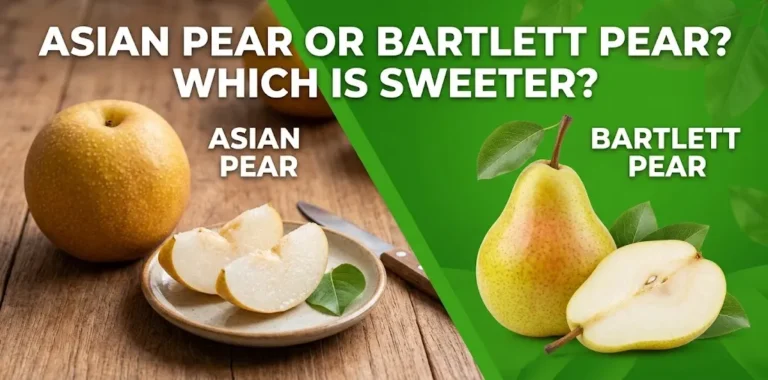
If you are choosing between an Asian pear and a Bartlett pear based mainly on sweetness, Bartlett pears are usually the sweeter choice by sugar content and have a stronger, richer pear flavor. Asian pears are also sweet, but their crisp texture, high juiciness, and lighter flavor can make their sweetness feel more refreshing. The exact sweetness varies by variety and ripeness.
The two pears can both be excellent for snacking, but they give you very different eating experiences. Bartlett is soft, juicy, and strongly pear-flavored when ripe. Asian pear stays firm and crunchy, even when fully ripe.
| Feature | Asian Pear | Bartlett Pear |
|---|---|---|
| Sweetness | Sweet, lighter and refreshing | Sweeter, richer pear flavor |
| Texture | Crisp and crunchy | Soft, tender, buttery when ripe |
| Juiciness | Very juicy | Very juicy |
| Flavor | Mild, floral, fresh | Strong classic pear flavor |
| Acidity | Generally mild | Slight tartness |
| Best for | Fresh eating, salads, slaws | Snacking, desserts, sauces, canning |
| Ripening | Ready to eat while still firm | Becomes soft as it ripens |
Why Bartlett Pears Usually Taste Sweeter
Bartlett pears are known for their classic sweet pear flavor. As they ripen, the flesh becomes soft and juicy, with a buttery texture and noticeable pear aroma. Their natural sugar content can also be higher than that of many Asian pears. One commonly cited comparison lists about 9.7 grams of sugar per 100 grams for Bartlett versus 7.1 grams for Asian pear, although values can vary with variety and growing conditions.
Ripeness matters a lot with Bartlett pears. A green Bartlett is often firm and not yet at its best. As it ripens, the skin turns yellow and the flesh becomes softer and more aromatic.
That change can make a ripe Bartlett taste much sweeter than a firm Bartlett that has not finished ripening.
Why Asian Pears Can Still Taste Very Sweet
Asian pears should not be thought of as simply “less sweet.” Many Asian pear varieties have a noticeable natural sweetness, with UC Davis reporting soluble-solids levels of roughly 11% to 14%, depending on the cultivar.
What makes them different is the way that sweetness is experienced.
Asian pears are crisp, juicy, and refreshing. Their flavor is usually lighter than a ripe Bartlett, so you get a clean fruit taste instead of the soft, intense pear flavor associated with Bartlett.
A sensory study of pears from the Pacific Northwest also found that consumers liked both Bartlett and Asian pears for sweetness and juiciness, but they described Asian pears as particularly appealing for their firm, crisp texture.
Asian Pear vs. Bartlett: How the Sweetness Feels
The word “sweet” does not always mean the same thing when you eat fruit.
A ripe Bartlett has a deep, classic pear sweetness. Its soft flesh releases plenty of juice, and its stronger pear aroma can make the flavor seem richer.
An Asian pear has a cleaner, lighter sweetness. The crunch and high juiciness make it feel more like eating a crisp apple while still having a recognizable pear flavor.
So, if you want a dessert-like pear with a strong pear taste, Bartlett usually has the advantage. If you want something sweet, crisp, and refreshing, Asian pear may be more appealing.
Which Pear Is Sweeter When Fully Ripe?
For most shoppers, a fully ripe Bartlett will taste sweeter and more intensely pear-like than a typical Asian pear.
There is an important difference in how the two fruits ripen. Western pears such as Bartlett are generally harvested before they are fully ripe and then ripened after harvest. Asian pears are typically allowed to reach eating maturity while still on the tree and remain firm when ripe.
That means you should not use softness as the main test for an Asian pear.
A ripe Asian pear can be firm and crunchy. A Bartlett, on the other hand, should develop noticeable softness as it reaches its best eating stage.
Which Is Better for Snacking?
Both are good choices, but your preferred texture makes the biggest difference.
Choose Bartlett if you like:
- Soft, juicy fruit
- Strong pear flavor
- A buttery texture
- A sweeter dessert-like taste
- Very ripe fruit
Choose Asian pear if you like:
- Crisp, crunchy fruit
- Refreshing sweetness
- Apple-like texture
- Very juicy bites
- A lighter pear flavor
For a lunchbox or snack where you want crunch, Asian pear is especially appealing. For someone who wants a soft, sweet pear that feels almost dessert-like, ripe Bartlett is usually the better pick.
Which Is Better for Kids?
For kids who prefer crunchy fruit, Asian pear is often the easier choice. Its firm texture gives it a satisfying crunch and it does not become soft simply because it is ripe.
For kids who prefer soft fruit, a ripe Bartlett may be more appealing because its flesh is tender and juicy.
For younger children, cut either pear into appropriately sized pieces rather than serving large chunks.
Which Is Better for Salads?
Asian pear usually has the advantage for salads.
Its firm flesh holds its shape well after slicing, and the crisp texture adds a pleasant contrast to leafy greens, nuts, cheese, and other soft ingredients. Asian pears are also commonly used raw in salads and slaws because they maintain their crunch.
Bartlett can also work in salads, especially when it is firm and just beginning to ripen. But a very ripe Bartlett can become too soft for dishes where you want clean slices.
Which Is Better for Desserts?
Bartlett is usually the better choice for sweet desserts.
Its strong pear flavor and higher sugar content can work especially well in sauces, cakes, tarts, jams, and other cooked desserts. Bartlett pears also soften readily during cooking, which can be useful when you want the fruit to break down.
Asian pears are better when you want the fruit to retain some firmness. They can be grilled or used in some cooked dishes, but their high water content and crisp texture can make them less predictable for traditional baking.
What About Different Asian Pear Varieties?
“Asian pear” describes a broad group rather than one single pear variety. Varieties include Nijisseiki, Kosui, Niitaka, Hosui, and others, and their sweetness can differ. UC Davis notes that soluble-solids levels vary among Asian pear cultivars.
This is why one Asian pear may taste noticeably sweeter than another.
Growing conditions, harvest timing, storage, and variety can all affect the final eating experience. So a blanket statement that every Asian pear is less sweet than every Bartlett would be too simple.
How to Pick the Sweeter Pear at the Store
If sweetness is your main goal, choosing the right stage of ripeness matters.
For Bartlett, look for fruit that is beginning to turn from green toward yellow and gives slightly to gentle pressure near the neck. A ripe Bartlett should smell pleasantly fruity and feel tender rather than rock hard.
For Asian pear, look for fruit that is firm, heavy for its size, and fragrant. Firmness does not mean it is unripe in the same way it does with a Bartlett. Asian pears are meant to remain crisp when ready to eat.
Avoid pears with major bruises, soft damaged spots, or signs of decay.
Which One Should You Choose?
The better choice depends on what you mean by “sweeter.”
| If you want… | Better choice |
|---|---|
| Stronger sweet pear flavor | Bartlett |
| Higher sugar in a typical comparison | Bartlett |
| Crisp texture with sweetness | Asian pear |
| Refreshing, light sweetness | Asian pear |
| Soft and buttery texture | Bartlett |
| Crunchy snack | Asian pear |
| Sweet sauces and desserts | Bartlett |
| Salads and slaws | Asian pear |
A useful way to think about it is Bartlett for rich sweetness and Asian pear for crisp sweetness.
Frequently Asked Questions
Is an Asian pear sweeter than a Bartlett pear?
Usually, no. Bartlett pears generally have a stronger sweet flavor and can contain more sugar than many Asian pears, although sweetness varies by cultivar and growing conditions.
Which pear is sweeter when fully ripe?
A fully ripe Bartlett will usually taste sweeter and more intensely pear-like. Asian pears can be quite sweet, but their crisp texture and lighter flavor give them a fresher taste.
Which is better for a sweet snack, Asian pear or Bartlett?
Choose Bartlett if you prefer soft, rich sweetness and a classic pear flavor. Choose Asian pear if you prefer a crisp, juicy texture with a lighter, refreshing sweetness.
The Bottom Line
If your only question is Asian pear or Bartlett pear—which is sweeter?, Bartlett is generally the better answer. Ripe Bartlett pears tend to have more noticeable sugar and a stronger sweet pear flavor, while Asian pears offer a lighter sweetness with much more crunch and refreshment.
The best practical tip is to choose based on both sweetness and texture. Pick a ripe Bartlett when you want a soft, rich pear; choose an Asian pear when you want a crisp, juicy snack.