Comice or Bartlett Pear? Which Is Sweeter?

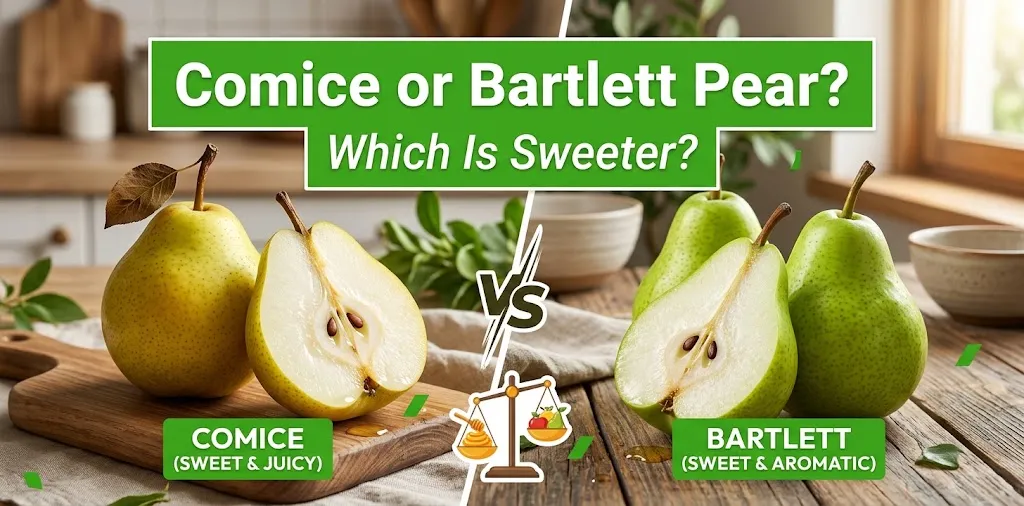
Comice pears are generally considered sweeter than Bartlett pears, especially when both are fully ripe. Comice has a rich, buttery sweetness with very juicy, smooth flesh, while Bartlett has a stronger classic pear flavor and can become very sweet as it ripens. For pure sweetness, Comice has the edge; for a balanced, familiar pear taste, Bartlett is an excellent choice.
Comice vs. Bartlett: Sweetness at a Glance
| Feature | Comice Pear | Bartlett Pear |
|---|---|---|
| Sweetness | Very sweet | Sweet to very sweet when ripe |
| Flavor | Rich, buttery, mellow | Classic, aromatic pear flavor |
| Texture | Smooth, soft, juicy | Soft, juicy, slightly coarse when ripe |
| Aroma | Mild and fragrant | Strong, classic pear aroma |
| Best for | Fresh eating, desserts, cheese | Snacking, salads, canning |
| Ripening clue | Softens near the stem | Changes from green toward yellow and softens |
USA Pears describes Comice as “exceptionally sweet” and says its flesh is among the smoothest, sweetest, and juiciest. Bartlett is also very sweet when ripe, but its flavor is more distinctly traditional and aromatic.
Why Comice Usually Tastes Sweeter
Comice is known for a rich sweetness rather than a sharp or tart flavor. Its soft, buttery flesh also makes the sweetness feel more pronounced when you eat it fresh.
California Pears describes Comice as having a high sugar content and a sweet, juicy, buttery flavor. That makes it especially appealing if your main goal is a dessert-like pear for eating out of hand.
Bartlett can also taste extremely sweet, but its flavor profile is different. It has a stronger traditional pear taste and plenty of juice. When a Bartlett is allowed to ripen fully, it becomes much sweeter and softer than when it is still green.
How Ripeness Changes the Comparison
Ripeness matters a lot when comparing these two pears.
A firm, underripe Bartlett may taste crisp and somewhat tart. As it ripens, its skin changes from green toward yellow and its flesh becomes softer, juicier, and sweeter. USA Pears recommends ripening pears at room temperature rather than expecting an unripe pear to become ready in the refrigerator.
Comice is different because its skin does not show a dramatic color change as it ripens. Instead, check the area around the stem. A slight yield to gentle pressure is a better sign that it is ready to eat.
This means an underripe Comice and a fully ripe Bartlett can give you a very different impression from the usual Comice-versus-Bartlett comparison.
Comice vs. Bartlett for Snacking
For fresh snacking, Comice is the better choice if you want maximum sweetness and a soft, buttery texture.
Its smooth flesh and rich flavor make it especially good when eaten by itself or served as a dessert fruit. It also pairs well with cheese.
Bartlett is a better pick if you prefer a juicy pear with a stronger classic pear flavor. It is also widely available in U.S. grocery stores, making it an easy everyday choice.
Comice vs. Bartlett for Desserts and Cheese
Comice has a natural advantage for simple desserts and cheese boards because of its buttery texture and concentrated sweetness.
Bartlett can also work well with cheese, but its versatility extends further. It is commonly used for salads, fresh eating, preserves, and canning.
If you are serving sliced pears with a mild or salty cheese, Comice can provide a rich sweet contrast. If you want a more familiar pear flavor that works in several dishes, Bartlett is the safer all-purpose choice.
Which Pear Has a Stronger Pear Flavor?
Bartlett usually wins for classic pear flavor.
USA Pears describes Bartlett as having a definitive pear flavor and being highly aromatic. Comice is also flavorful, but its character is more buttery, mellow, and exceptionally sweet.
So the choice depends on what you mean by “better”:
- Sweeter: Comice
- More buttery: Comice
- More classic pear flavor: Bartlett
- More aromatic: Bartlett
- Very juicy: Both
- Soft and smooth texture: Comice
- More versatile for processing: Bartlett
Which One Should You Buy?
Choose Comice if your priority is a rich, dessert-like sweetness. It is especially good when you plan to eat the pear fresh.
Choose Bartlett if you want a familiar pear flavor, strong aroma, and a variety that can work for both fresh eating and other uses such as canning.
For example, someone putting together a simple cheese plate might prefer ripe Comice. Someone buying pears for the family to snack on while also wanting the option to use extras for preserves might choose Bartlett.
A Side-by-Side Taste Test Is Worth Trying
Sweetness is not the only part of how a pear tastes. Texture, aroma, acidity, ripeness, and personal preference can all affect which pear seems sweeter or better.
A 2024 sensory study of Pacific Northwest pears found that consumers had different preferences for Comice and Bartlett, with people describing both varieties positively for sweetness, flavor, juiciness, and texture.
For the fairest comparison, taste both pears when they are properly ripe. An underripe Bartlett should not be compared with a perfectly ripe Comice.
FAQ
Is Comice sweeter than Bartlett pears?
Yes, Comice is generally considered the sweeter of the two. USA Pears describes Comice as exceptionally sweet, while Bartlett becomes very sweet as it reaches full ripeness.
Which pear is better for eating fresh, Comice or Bartlett?
Comice is an excellent choice for fresh eating because of its sweet, juicy, buttery flesh. Bartlett is also excellent fresh, especially when fully ripe, and offers a stronger traditional pear flavor.
How can you tell when a Comice pear is ripe?
Comice usually does not change color much as it ripens. Gently press near the stem; when that area gives slightly, the pear is generally ready to eat.
The Bottom Line
If sweetness is your top priority, choose Comice. Its rich, buttery flavor and very juicy texture make it one of the sweetest-tasting pear varieties. Bartlett is still an excellent choice if you prefer a stronger classic pear flavor and want a more versatile variety.
Expert tip: Let either pear ripen properly before judging its sweetness. A ripe pear can taste dramatically different from one that is still firm and underripe.