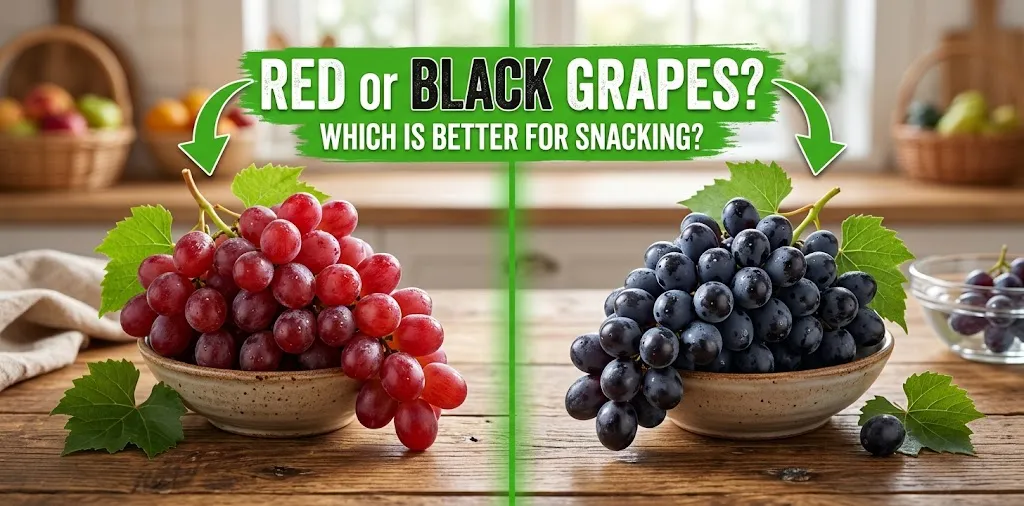
Red or Black Grapes? Which Is Better for Snacking?

Red and black grapes are both excellent choices for snacking, but red grapes often have the edge if you want a crisp, sweet, easy-to-eat option. Black grapes can be the better pick if you prefer a deeper, richer flavor and darker skin. For everyday snacking, the best choice usually comes down to sweetness, texture, seedlessness, and freshness rather than color alone.
Red vs. Black Grapes for Snacking
Both red and black grapes are sold as table grapes, and the exact taste and texture can vary by variety. That matters because a crisp, sweet black seedless grape may be a better snack than a soft red grape, even though red grapes are often associated with easy snacking.
| Factor | Red Grapes | Black Grapes |
|---|---|---|
| Flavor | Sweet, often slightly tart | Often deeper and fruitier |
| Texture | Usually crisp and juicy | Can range from crisp to soft |
| Sweetness | Mild to very sweet, depending on variety | Often very sweet, depending on variety |
| Seedless options | Very common | Available, but variety-dependent |
| Skin | Red to reddish-purple | Deep purple to nearly black |
| Best for | Everyday snacking and lunch boxes | Sweet snacks and richer fruit flavors |
| Overall snack appeal | Excellent | Excellent |
The biggest point is that grape color does not tell you everything. Table grape varieties can differ significantly in sweetness, firmness, size, and flavor, so the specific variety and freshness can matter more than whether the grapes look red or black.
Which Tastes Sweeter?
If you like a straightforward sweet grape flavor, red grapes are a reliable choice. Many red table grapes have a balance of sweetness and mild acidity that makes them refreshing rather than overly sweet.
Black grapes can taste richer and more intense. Some varieties have berry-like or jammy notes, while specialty black grapes can be especially sweet and crisp.
There is no universal rule that black grapes are always sweeter than red grapes. Growing conditions, ripeness, and variety all affect flavor.
Which Has a Better Texture?
For snacking, texture is almost as important as flavor.
A good table grape should feel firm and juicy when you bite into it. Red grapes are widely available in crisp seedless varieties, making them convenient for eating straight from the refrigerator.
Black grapes can also have an excellent crunch. Some specialty varieties are grown specifically for a firm texture and fresh-eating appeal.
If you’re choosing grapes at a grocery store, don’t focus only on color. Look for berries that appear plump and firm rather than shriveled, leaking, or visibly damaged.
Red or Black Grapes for Everyday Snacking?
For a typical snack, red grapes are slightly easier to recommend because seedless red table grapes are widely available and usually offer a familiar sweet, crisp flavor.
They work well for:
- School or work lunch boxes
- Afternoon snacks
- Fruit bowls
- Yogurt bowls
- Quick snacks straight from the refrigerator
- Pairing with nuts or cheese
Black grapes are a great alternative when you want a more intense grape flavor. Their darker color also makes them attractive on fruit plates and snack boards.
For example, if you want something simple to grab between meals, a bowl of chilled seedless red grapes is an easy choice. If you’re putting together a fruit and cheese plate and want a darker, richer-looking fruit, black grapes can be a better fit.
Are Black Grapes Healthier Than Red Grapes?
Not necessarily. Both can be part of a nutritious eating pattern, and their basic nutrition is fairly similar.
Grapes provide carbohydrates, natural sugars, water, and small amounts of fiber, along with nutrients such as vitamin K and vitamin C. Darker grapes also contain plant compounds called anthocyanins, which contribute to their purple-black color. Research on table grapes has found differences in antioxidant compounds among grape types, with black grapes showing higher total antioxidant capacity in the tested samples.
That does not mean you need to choose black grapes every time. For a snack, the grape you enjoy and will actually eat is a practical choice.
Which Grapes Are Better for Kids’ Snacks?
Seedless grapes are generally more convenient for kids because there are no hard seeds to remove. Red seedless grapes are especially common in U.S. grocery stores and have a mild, sweet flavor that many children enjoy.
Black seedless grapes can work just as well if your child prefers their flavor.
For young children, grapes should be cut appropriately because whole grapes can be a choking hazard.
How to Choose the Best Grapes at the Store
Color is only one part of choosing good grapes. When you’re shopping, pay attention to their condition.
Look for grapes that are:
- Firm and plump
- Attached reasonably well to fresh-looking stems
- Free from obvious mold
- Free from excessive leaking or crushed berries
- Not noticeably shriveled
Once you bring them home, keep grapes refrigerated. For the best texture, wash the amount you plan to eat rather than washing the entire package immediately. Grapes are generally best stored unwashed until you’re ready to eat them.
Red or Black Grapes: Which Should You Pick?
If your main goal is easy everyday snacking, choose red seedless grapes when you want a familiar sweet flavor, crisp texture, and convenient eating.
Choose black grapes when you prefer a deeper fruit flavor, darker color, or a particularly sweet specialty variety.
There is no clear winner for everyone. Freshness and the specific grape variety can make a bigger difference than the color itself.
Frequently Asked Questions
Are red or black grapes sweeter?
Either can be sweeter depending on the variety and how ripe the grapes are. Many black grapes have a rich, intense sweetness, while red grapes often combine sweetness with mild acidity.
Are black grapes better for snacking than red grapes?
Not automatically. Both are good for fresh snacking, but red seedless grapes may be more convenient for everyday use because they are widely available and easy to eat.
Should I buy red or black grapes for a fruit tray?
Either works well. Red grapes provide a bright color and familiar sweet flavor, while black grapes add a darker color and can provide a richer fruit taste.
Final Takeaway
For most everyday snacks, red grapes are the slightly easier all-around choice, especially when you want crisp, seedless grapes with a familiar sweet flavor. Black grapes are an excellent choice when you prefer deeper flavor and darker-colored fruit.
The practical tip is simple: compare the specific variety, firmness, seedlessness, and freshness rather than choosing based on color alone.