Kent or Haden Mango? Which Is Better for Smoothies?

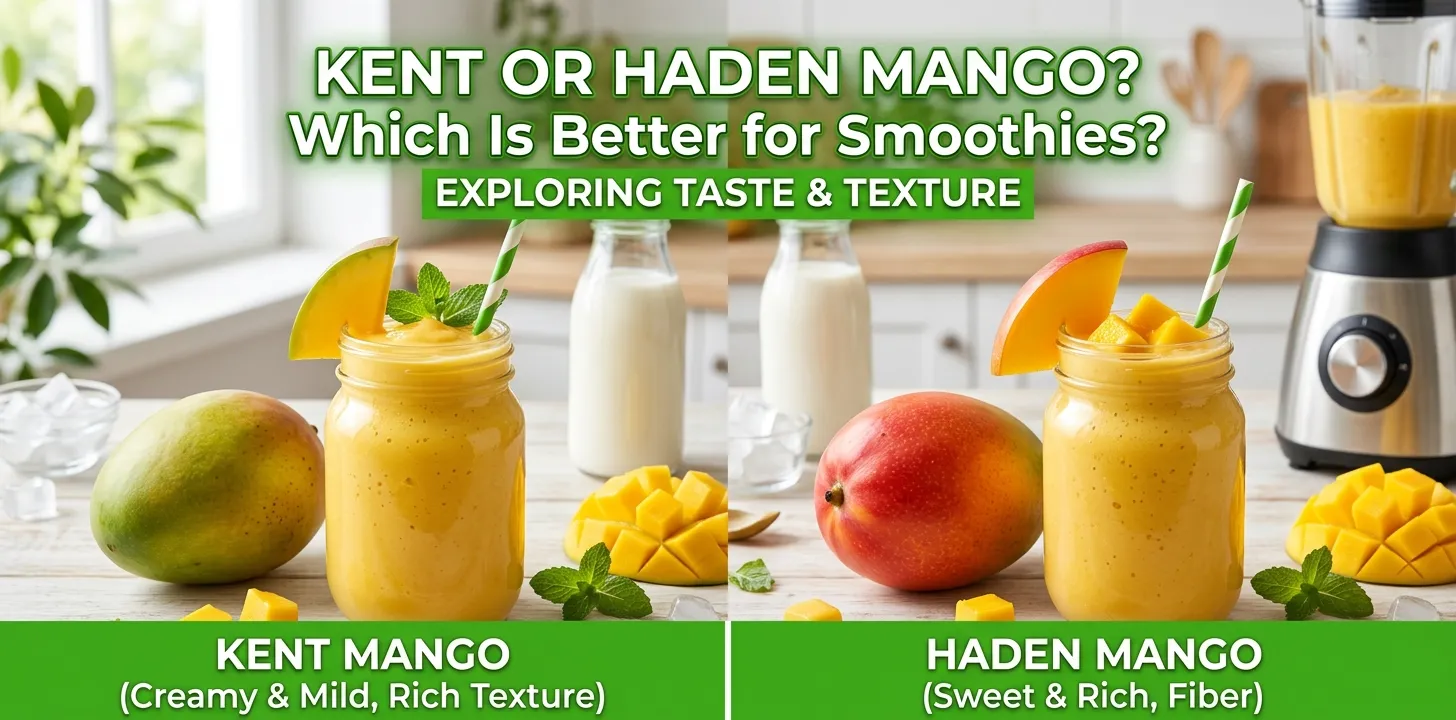
If you are choosing between Kent and Haden mangoes for smoothies, Kent is usually the better choice. Kent has juicy, tender flesh with limited fiber, a rich sweet flavor, and a smooth texture that blends easily. Haden has a more classic sweet-tart mango flavor, but its fine fibers can make a smoothie slightly less silky.
Kent vs. Haden Mango for Smoothies
Both varieties can make a good smoothie, but they behave a little differently in the blender. The biggest differences are fiber, texture, sweetness, and flavor balance.
| Feature | Kent Mango | Haden Mango |
|---|---|---|
| Flavor | Sweet, rich, mildly tart | Sweet, fruity, slightly tart |
| Texture | Juicy and tender | Firm with fine fibers |
| Fiber | Limited | More noticeable |
| Smoothie texture | Very smooth | Can be slightly fibrous |
| Aroma | Peach and tropical fruit | Tropical fruit with peach notes |
| Best use | Smoothies, juice, fresh eating | Smoothies, fresh eating, salsa |
| Best choice for a silky smoothie | Yes | Good, but not as smooth |
The National Mango Board describes Kent as having juicy, tender flesh with limited fibers and specifically lists it as suitable for juicing. Haden has firmer flesh because of its fine fibers and has a sweet-and-sour tropical flavor.
Why Kent works so well in smoothies
Kent mango has one major advantage: its flesh has relatively little fiber. That matters when you blend mango with milk, yogurt, juice, or other fruits because you want the finished drink to feel creamy rather than stringy.
Kent also has a rich, sweet flavor that can remain noticeable when combined with other ingredients. The National Mango Board recommends Kent for juicing and describes its flesh as juicy and tender with limited fibers.
For a basic mango smoothie, Kent is especially useful when you want the mango itself to provide most of the flavor.
What Haden brings to a smoothie
Haden has a different character. The National Mango Board describes its flavor as sweet and sour with tropical fruit notes and a slight bitter aftertaste. Its flesh is firmer because of fine fibers.
That does not make Haden a bad smoothie mango. In fact, its mild acidity can give a smoothie a more noticeable fruit flavor.
The trade-off is texture. If the Haden mango is particularly fibrous, you may notice more small fibers after blending than you would with Kent.
Which Mango Makes a Smoother Smoothie?
Kent wins for texture.
Its limited fiber makes it easier to create a smooth, creamy drink. This is especially helpful if you do not plan to strain the smoothie.
Haden can still work well, particularly when the fruit is fully ripe. But its fine fibers give it an advantage in firmness rather than ultra-smooth texture.
If your priority is:
- Silky texture: Choose Kent
- Rich mango flavor: Choose Kent
- A little more sweet-tart character: Choose Haden
- Less fiber: Choose Kent
- A classic Florida mango flavor: Haden is worth trying
Which One Is Sweeter?
Both Kent and Haden can be quite sweet when ripe, so ripeness matters as much as variety.
Kent is generally described as sweet with some sour notes, while Haden has a more pronounced sweet-and-sour profile.
For smoothies, you usually do not need to add much sweetener when using a ripe mango. Taste the fruit first, then decide whether ingredients such as banana, honey, or another sweet fruit are necessary.
This is also useful because adding several sweet ingredients can hide the mango’s natural flavor.
How to Choose a Ripe Mango for a Smoothie
A ripe mango is much more important than simply choosing the “right” variety.
For Kent, the National Mango Board recommends looking for yellow undertones or dots covering more of the fruit as it ripens. A gentle squeeze can also help judge ripeness.
For Haden, green areas turn more yellow as the mango ripens, and gentle pressure can help you judge softness.
Do not rely only on red skin. Mango varieties can remain partly green even when ripe, so color alone is not always a reliable test.
A simple ripeness test
Hold the mango gently and press the skin with your fingers.
- Very hard: Usually needs more time to ripen
- Slightly soft: Good for many smoothies
- Very soft: May be extremely ripe and best used soon
A ripe mango should also have a pleasant fruity aroma.
Kent vs. Haden for Different Smoothie Recipes
The better choice can change slightly depending on what else goes into your smoothie.
Mango and yogurt smoothie
Kent is the better pick.
Its low-fiber texture works nicely with yogurt and can help create a thick, creamy drink.
Mango and banana smoothie
Either variety works.
Banana already provides thickness and sweetness, so Haden’s slightly tart flavor can add a nice contrast. Kent is still the safer choice if you want the smoothest possible texture.
Mango and citrus smoothie
Haden can be a good choice.
Orange, lime, or pineapple already brings acidity, so the slightly sweet-tart character of Haden can fit well with a bright fruit smoothie.
Simple mango smoothie
Kent is the easiest choice.
If the recipe is mostly mango, milk, yogurt, or juice, the limited fiber of Kent becomes more noticeable.
Can You Use Frozen Kent or Haden Mango?
Yes. Frozen mango can be convenient for smoothies because it chills the drink while also adding body.
If you freeze fresh mango yourself, peel and cut it into pieces first. Spread the pieces out so they freeze individually, then transfer them to a freezer-safe container or bag.
For either variety, freezing ripe mango is a practical way to keep extra fruit available for smoothies.
What About Mango Fiber in Smoothies?
Fiber is not automatically a problem. The issue is texture.
Kent has limited fibers, while Haden has fine fibers in its flesh.
If you like a very smooth smoothie, Kent has the advantage. If you do not mind a little texture, Haden can work perfectly well.
A high-powered blender may also make the difference less noticeable, although it does not change the underlying characteristics of the mango.
Kent or Haden: Which Should You Buy?
For most people making smoothies, buy Kent if you have the choice.
Kent’s combination of juicy flesh, sweet flavor, and limited fiber makes it especially well suited to blending.
Choose Haden when you prefer its more classic sweet-tart tropical flavor or when it is the better ripe option available at your store. A perfectly ripe Haden can make a very good smoothie, even though it is somewhat more fibrous.
For shoppers in the United States, availability can also vary by season and source country. Kent is commonly supplied from Mexico, Peru, and Ecuador, while Haden is also sourced from Mexico, Ecuador, and Peru.
Frequently Asked Questions
Is Kent mango better than Haden mango for smoothies?
Yes, Kent is generally better if your main goal is a smooth, creamy texture. Its flesh has limited fibers, while Haden has fine fibers that can be more noticeable when blended.
Can Haden mango be used in a smoothie?
Yes. Haden’s sweet-tart tropical flavor works well in smoothies, especially with ingredients such as banana, citrus, or yogurt. Its main drawback compared with Kent is its firmer, more fibrous flesh.
Should mangoes be fully ripe before making smoothies?
For the best flavor, use mangoes that are ripe and slightly soft. A ripe mango is usually sweeter and more flavorful, which can reduce the need for added sweeteners.
Final Verdict
Kent is the better overall mango for smoothies. Its juicy flesh, rich flavor, and limited fiber give it the edge for a smooth, creamy blend.
Haden is still a good option if you enjoy a more sweet-tart mango flavor or simply find a better-ripe Haden at the store.
Expert tip: When choosing between the two, prioritize a ripe mango over the variety. A perfectly ripe Haden will usually make a better smoothie than an underripe Kent.