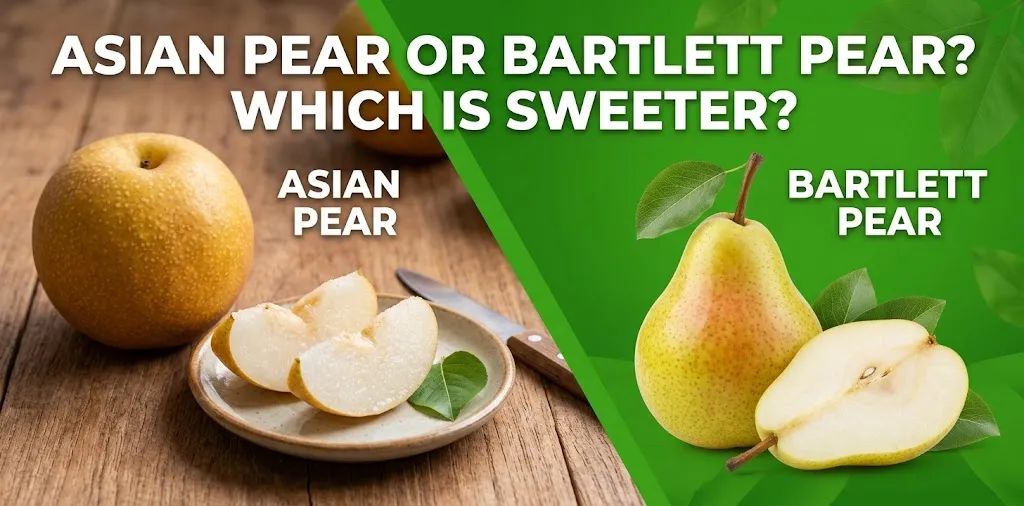
Asian Pear or Bartlett Pear? Which Is Sweeter?

Asian pears are generally very sweet, crisp, and juicy, while Bartlett pears become especially sweet as they ripen from green to golden yellow. If you compare a fully ripe Bartlett with a typical Asian pear, the difference can be small, and the specific variety matters. Asian pears often taste sweeter because of their low acidity and crisp, juicy texture, while Bartlett has a stronger classic pear aroma and richer ripe flavor.
Asian Pear vs. Bartlett Pear at a Glance
| Feature | Asian Pear | Bartlett Pear |
|---|---|---|
| Sweetness | Very sweet | Sweet to very sweet when ripe |
| Texture | Crisp and crunchy | Soft, smooth, and juicy when ripe |
| Flavor | Mild, clean, honey-like | Strong, fragrant, classic pear flavor |
| Acidity | Usually low | More noticeable, especially before ripe |
| Ripening | Ripens on the tree | Ripens after harvest |
| Best for | Fresh snacking, salads | Snacking, smoothies, canning, desserts |
| Eating texture | Similar to a crisp apple | Similar to a soft, juicy pear |
Asian pears and Bartletts are both sweet, but they give you a very different eating experience. Asian pears are known for crisp flesh and high sweetness, while Bartletts develop a softer texture and stronger sweetness as they ripen.
Which Pear Is Actually Sweeter?
Asian pears have a strong reputation for sweetness, and many varieties are described as very sweet with low acidity. Penn State Extension notes that Asian pears have crisp flesh and are “always very sweet,” although sweetness varies among cultivars.
Bartlett pears can also become extremely sweet. USA Pears explains that a green Bartlett is crisp and tart, while a golden-yellow Bartlett develops a much sweeter, juicier flavor.
So there is no universal winner for every pear.
If your question is “Which one usually tastes sweeter when eaten fresh?”, an Asian pear is often the better pick.
If your question is “Which one has the richer, stronger sweet-pear flavor?”, a fully ripe Bartlett may be more satisfying.
Why Asian Pears Often Taste Sweeter
Asian pears have several qualities that make their sweetness stand out.
They are typically low in acidity, so there is less tartness competing with the sweet taste. Their flesh is also extremely juicy and crisp.
Different Asian pear varieties can taste different, too. For example, Penn State Extension describes Shinseiki as having a very sweet taste, while Kosui is described as very sweet and juicy.
The crisp texture can also change how you experience the fruit. Instead of the soft, buttery texture of a ripe European pear, an Asian pear gives you a fresh, crunchy bite.
Asian Pear Varieties Can Differ
“Asian pear” is a broad category rather than one single variety. Common varieties include:
- Hosui
- Kosui
- Shinseiki
- 20th Century
- Olympic
Their sweetness, aroma, skin, and texture can vary. So comparing one Asian pear variety with Bartlett does not necessarily represent every Asian pear.
Why Bartlett Pears Get Sweeter as They Ripen
Bartlett pears are different from Asian pears in how they ripen.
Asian pears generally ripen on the tree and are ready to eat when harvested. Bartlett pears are harvested mature but not fully ripe and then ripen at room temperature.
A Bartlett can therefore taste very different depending on when you eat it.
A green Bartlett tends to be firmer and more tart. As its skin changes toward yellow, the flesh becomes softer and sweeter. USA Pears recommends allowing it to reach a golden-yellow color if you want a very sweet, juicy Bartlett.
This is one reason people sometimes think Bartlett pears are less sweet than Asian pears: they may be eating the Bartlett before it has fully ripened.
Asian Pear vs. Bartlett: Taste and Texture
The biggest difference may not actually be sweetness. Texture and flavor are often more noticeable.
| Category | Asian Pear | Bartlett Pear |
|---|---|---|
| Bite | Crisp and crunchy | Soft and juicy when ripe |
| Juice | Very juicy | Very juicy when ripe |
| Aroma | Mild to moderate | Strong and fragrant |
| Sweetness | High | High when fully ripe |
| Tartness | Usually low | More noticeable when underripe |
| Pear flavor | Mild and clean | Strong and classic |
A 2024 sensory study of Pacific Northwest pears found that consumers liked Bartlett for its sweetness, juiciness, familiar pear flavor, and combination of textures. Asian pears were also liked for their texture, juiciness, and sweetness.
That means the “sweeter” choice can depend partly on what kind of sweetness you enjoy.
Which Is Sweeter for Snacking?
Choose Asian pear if you want a crisp, very sweet snack.
It works well when you want something crunchy and juicy, similar in texture to an apple. You can eat it fresh without waiting for the flesh to become soft.
Choose Bartlett if you prefer a soft, juicy, strongly flavored pear.
For the sweetest Bartlett experience, wait until the pear has ripened and turned golden yellow.
A Simple Example
Imagine you are packing fruit for a school or family snack.
An Asian pear is a good choice if you want a firm, crunchy bite that is already ready to eat.
A ripe Bartlett is better if you want a soft, juicy fruit with a stronger pear aroma.
Neither is a bad choice. They simply deliver sweetness differently.
Which Is Better for Salads?
For salads, Asian pears are often the better choice when you want crunch.
Their firm flesh holds its shape well after slicing, and their mild sweetness works with greens, nuts, cheese, and savory dressings.
Bartlett can also work in salads, but its softer flesh becomes more delicate as it ripens. USA Pears lists Bartlett as suitable for fresh eating and salads, so the choice mainly comes down to the texture you want.
Which Is Better for Cooking and Canning?
Bartlett has the advantage for canning and many cooked pear recipes.
Bartlett has long been associated with canning because of its strong pear flavor and sweetness. USA Pears also lists preserves, syrups, chutneys, and dried pears among its uses.
Asian pears are commonly eaten fresh and can also be used in salads and marinades. Their crisp texture makes them especially useful when you want the fruit to retain some bite.
Does Ripeness Change Which Pear Is Sweeter?
Yes. Ripeness can make a major difference with Bartlett pears.
A Bartlett that is still green can taste crisp and tart. As it ripens, it becomes softer, juicier, and much sweeter.
Asian pears are different because they are normally harvested when they are ready to eat. They do not need the same countertop ripening process as Bartlett pears.
So when comparing the two at the grocery store, make sure you are comparing a ripe Bartlett with a ready-to-eat Asian pear.
Which One Should You Buy?
The right choice depends on the type of sweetness and texture you want.
| If you want… | Better choice |
|---|---|
| Very crisp and sweet fruit | Asian pear |
| Soft and juicy fruit | Bartlett |
| Strong classic pear flavor | Bartlett |
| Mild, low-acid sweetness | Asian pear |
| Crunchy salad topping | Asian pear |
| Canning | Bartlett |
| A pear that is ready to eat immediately | Asian pear |
| A very ripe, juicy dessert pear | Bartlett |
Frequently Asked Questions
Are Asian pears sweeter than Bartlett pears?
Asian pears are often perceived as sweeter because many varieties have high sweetness and relatively low acidity. However, a fully ripe Bartlett can also be very sweet, so the specific variety and ripeness level matter.
Which pear is sweeter when ripe?
Both can be very sweet, but Asian pears are generally known for naturally sweet, crisp flesh, while Bartlett develops its strongest sweetness after ripening. A golden-yellow Bartlett is much sweeter than an underripe green Bartlett.
Which is better for someone who likes crunchy fruit?
Asian pear is usually the better choice. Its crisp flesh stays firm and has an apple-like crunch, while a ripe Bartlett becomes soft and juicy.
The Bottom Line
If sweetness and crunch are your top priorities, choose an Asian pear. If you want strong pear flavor, soft texture, and rich sweetness, choose a fully ripe Bartlett. The best practical tip is to judge Bartlett by ripeness—letting it turn golden yellow can make a major difference in sweetness and texture.