Baby Banana or Cavendish? Which Is Better for Smoothies?

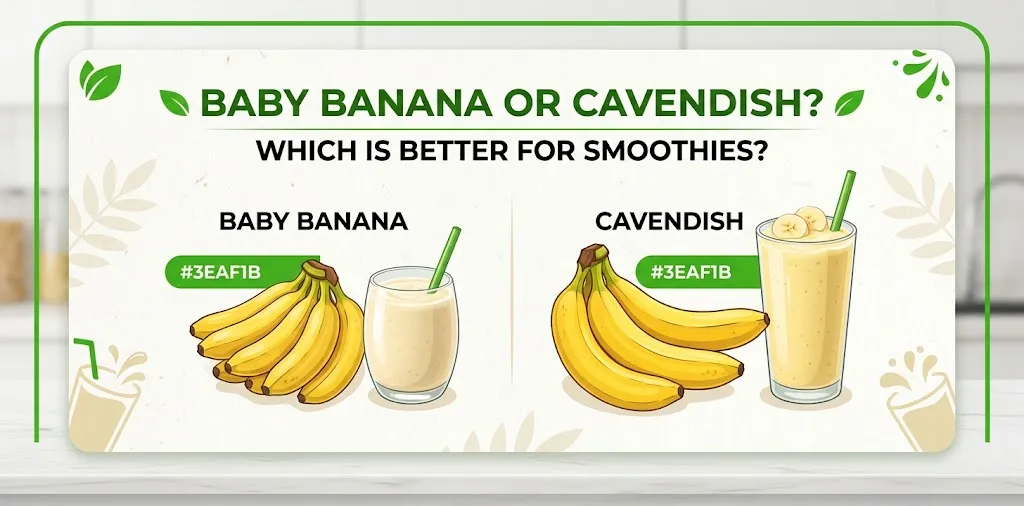
If you want a sweeter, richer smoothie with a creamy texture, baby bananas are usually the better choice. Cavendish bananas are the better all-purpose option because they are larger, easier to find, less expensive in many U.S. stores, and provide a dependable creamy base. The best choice depends on sweetness, texture, cost, and how much banana your recipe needs.
Baby Banana vs. Cavendish for Smoothies
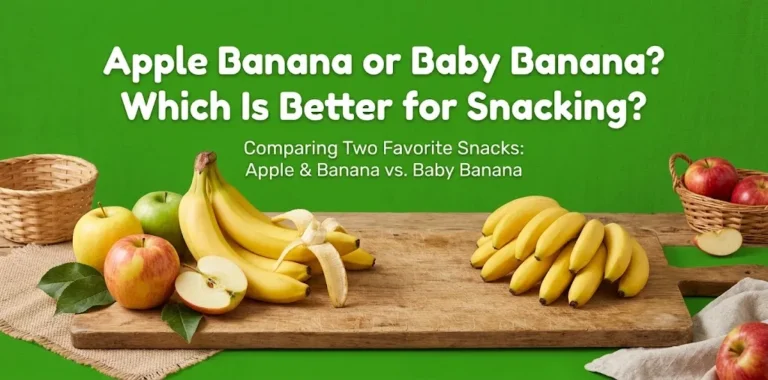
Baby bananas and Cavendish bananas can both make excellent smoothies, but they behave a little differently in the blender. Baby bananas are generally smaller, sweeter, and more intensely flavored, while Cavendish bananas have a familiar banana taste and are easier to use in larger quantities.
| Factor | Baby Banana | Cavendish |
|---|---|---|
| Flavor | Sweeter and more concentrated | Mild, classic banana flavor |
| Texture | Dense and creamy | Soft and creamy when ripe |
| Sweetness | Usually higher-tasting | Moderate to sweet when ripe |
| Smoothie texture | Very creamy | Creamy and smooth |
| Amount needed | More individual bananas | Fewer bananas |
| Availability in the U.S. | Less common | Very common |
| Cost | Often higher per pound | Usually more budget-friendly |
| Best use | Sweet, dessert-like smoothies | Everyday smoothies |
The difference is most noticeable when the banana is fully ripe. An underripe banana will not give either variety the same sweetness or soft texture as a ripe one.
Why Baby Bananas Work So Well in Smoothies
Baby bananas, often sold as Lady Finger or similar small banana varieties, are known for their sweet flavor and creamy flesh. They are naturally much smaller than the standard Cavendish banana.
That concentrated sweetness can be useful when you’re making a smoothie with ingredients that are naturally tart or mild.
For example, a smoothie made with:
- Plain Greek yogurt
- Frozen berries
- Milk
- Baby banana
can get a pleasant sweetness from the banana without needing much added sweetener.
Baby bananas also have a dense texture, which can help create a thick smoothie. Specialty Produce describes their flesh as smooth, dense, and creamy.
One downside is that you may need several baby bananas to replace the amount of fruit provided by one large Cavendish.
Why Cavendish Is Still an Excellent Smoothie Banana
Cavendish is the standard banana most U.S. shoppers recognize. It is widely available and is commonly used because of its mild flavor, creamy texture, and versatility.
For an everyday breakfast smoothie, Cavendish is hard to beat.
You can use one ripe banana with:
- Peanut butter
- Oat milk
- Greek yogurt
- Strawberries
- Blueberries
- Spinach
- Cinnamon
- Cocoa powder
Because Cavendish bananas are larger, one fruit can provide enough banana flavor and thickness for a typical single-serving smoothie.
Which Banana Makes a Sweeter Smoothie?
Baby bananas usually win for sweetness.
Baby bananas are commonly described as sweeter and more intensely flavored than Cavendish bananas. Their flavor can have honey-like or floral notes, depending on the variety and ripeness.
That makes them especially useful if you want a smoothie that tastes naturally sweet.
Cavendish can also become very sweet as it ripens. So the difference is not simply about variety. Ripeness matters a lot.
A green or barely yellow banana will usually produce a less sweet smoothie than a banana with a fully yellow peel and some brown spotting.
Which Banana Makes a Creamier Smoothie?
Both can create a creamy smoothie, but baby bananas have an edge if you prefer a thicker, richer texture.
Their flesh is relatively dense and creamy, while ripe Cavendish bananas blend into a smooth, soft base.
For an extra-thick smoothie, try freezing peeled banana pieces before blending. Frozen fruit can make the drink colder and thicker without requiring as much ice.
A simple combination is:
Frozen banana + Greek yogurt + milk + berries
If the mixture becomes too thick, add a small amount of milk and blend again.
Which Is Better for Berry Smoothies?
Baby bananas are a particularly good choice for berry smoothies when you want to balance tart flavors.
Strawberries, raspberries, and some mixed-berry blends can taste tart. The stronger sweetness of a ripe baby banana can help balance that flavor.
Cavendish works well too, especially if you prefer the classic banana-and-berry taste.
For example:
Tart berry smoothie:
Frozen mixed berries + baby banana + plain yogurt + milk
Classic berry smoothie:
Frozen strawberries + Cavendish banana + Greek yogurt + milk
The first version may taste sweeter and more fruit-forward, while the second gives you a familiar banana flavor.
Which Is Better for Peanut Butter or Chocolate Smoothies?
For peanut butter and chocolate smoothies, Cavendish is usually the more practical choice.
These recipes already contain strong flavors, so the familiar banana flavor of a ripe Cavendish works well without making the smoothie overly sweet.
Try:
- 1 ripe Cavendish banana
- Peanut butter
- Milk
- Greek yogurt
- A little cocoa powder
- Ice or frozen banana
If you prefer a sweeter, more dessert-like result, substitute baby bananas.
Which Is Better for Green Smoothies?
For green smoothies, the choice depends on your preferred taste.
A baby banana can help soften the flavor of leafy greens because of its stronger sweetness. Cavendish is a good choice if you want the banana flavor to stay familiar and balanced.
For a simple green smoothie, combine a ripe banana with spinach, yogurt, milk, and a fruit such as pineapple or mango.
You do not need to use a specialty banana just because a smoothie contains greens.
Which Is More Convenient?
Cavendish wins for convenience.
In the United States, Cavendish bananas are much easier to find in regular grocery stores. They are also large enough that one banana can be enough for a smoothie.
Baby bananas are specialty produce in many stores. They may be available at larger supermarkets or international and specialty markets, but availability can vary by location.
Chiquita, for example, markets its small “Baby” bananas as a naturally smaller and sweeter option compared with its regular bananas.
If you’re making smoothies several times a week, Cavendish is usually the easier everyday choice.
What About Cost?
For most shoppers, Cavendish is the better value because it is widely produced, commonly stocked, and sold in larger quantities.
Baby bananas can cost more for the amount of edible fruit you get, especially when sold as specialty produce.
If your main goal is to make affordable breakfast smoothies, there is little reason to pay extra for baby bananas unless you specifically prefer their flavor.
The Ripeness Matters More Than You Might Expect
Choosing a good banana can make a bigger difference than choosing between these two varieties.
For smoothies, look for bananas that are:
- Fully yellow
- Soft but not spoiled
- Free of mold
- Naturally fragrant
- Starting to develop some brown spots
Very green bananas are firmer and less sweet. Overripe bananas with extensive spoilage should not be used.
Brown spots on an otherwise normal banana are not automatically a problem. In fact, a ripe banana with some brown spotting can be useful for smoothies because it tends to be softer and sweeter.
Can You Freeze Baby Bananas and Cavendish Bananas?
Yes. Both can be frozen for smoothies.
Peel the bananas, cut them into chunks, place the pieces in a suitable freezer container or bag, and freeze them until solid. Frozen banana pieces can help create a thick, cold smoothie without relying heavily on ice.
This is also a convenient way to use ripe bananas before they become too soft to enjoy fresh.
For the best texture, use frozen banana pieces rather than freezing a whole banana with its peel still on.
Two Simple Smoothie Ideas
Sweet Baby Banana Berry Smoothie
Use:
- 2 small ripe baby bananas
- 1 cup frozen mixed berries
- ½ cup plain Greek yogurt
- ½ to ¾ cup milk
- A few ice cubes if needed
Blend until smooth. Add more milk if the smoothie is too thick.
The baby bananas provide sweetness and a creamy base, while the berries add tartness and fruit flavor.
Classic Cavendish Peanut Butter Smoothie
Use:
- 1 ripe Cavendish banana
- 1 tablespoon peanut butter
- ¾ cup milk
- ½ cup Greek yogurt
- 1 teaspoon cocoa powder
- Ice or frozen banana as needed
Blend until creamy.
This is a better everyday option if you want a simple smoothie using ingredients that are easy to find at a U.S. grocery store.
So, Which Banana Should You Choose?
The answer depends on what you want from your smoothie.
Choose baby bananas if you want:
- More noticeable sweetness
- A richer banana flavor
- A dense, creamy texture
- A fruitier or dessert-style smoothie
- A smaller fruit portion that you can adjust easily
Choose Cavendish if you want:
- A classic banana flavor
- Easy availability
- Better everyday value
- One large banana for a typical smoothie
- A versatile ingredient for many recipes
For most everyday smoothies, Cavendish is the practical winner. But if sweetness and a richer banana flavor are your priorities, baby bananas are worth trying.
Frequently Asked Questions
Are baby bananas sweeter than Cavendish bananas in smoothies?
Generally, yes. Baby bananas are commonly described as sweeter and more intensely flavored than Cavendish bananas. However, the ripeness of either banana can have a major effect on the final smoothie.
Can I use baby bananas instead of Cavendish bananas in a smoothie?
Yes. Baby bananas can replace Cavendish bananas, but you may need more individual baby bananas because they are much smaller. Start with enough fruit to achieve the thickness and sweetness you want, then adjust the liquid.
Which banana is better for a thick frozen smoothie?
Baby bananas have a dense, creamy texture, but ripe Cavendish bananas also work very well when frozen. The most important factor is using enough frozen banana and adjusting the liquid gradually rather than adding too much at once.
Final Takeaway
Baby bananas are the better pick for a sweeter, richer smoothie, while Cavendish is the better everyday choice for convenience, value, and versatility. If you’re trying baby bananas for the first time, use them in a berry smoothie where their natural sweetness can stand out.
A useful tip: freeze ripe bananas in peeled chunks so you always have a creamy smoothie base ready when you need it.